

CCTV drainage surveys
Collapsed Drain
A collapsed drain rarely announces itself. Ground movement, old pipe materials and heavy loading can close a pipe while water still finds a way through for a while. We can help with CCTV surveys that can show what has failed and how far the visible damage extends.
What a collapsed drain means
A drain has collapsed when the pipe structure can no longer hold its shape. The barrel may flatten, crack through, shear at a joint or lose a section entirely, letting surrounding ground fall in. Water and waste then meet an obstruction, a void or both.
Total blockage is not the only outcome. A pipe can be partly open at the invert while the crown has dropped, so flow continues but solids catch. In other cases the ground above has already begun to move, and the first visible clue is a dip in a driveway or a patch of subsidence near a run of pipework.
Older pipe materials behave differently. Pitch fibre, common in post-war housing, can deform under load and lose its bore over time. Clayware cracks at joints where ground movement concentrates stress. Concrete and plastic pipes fail in their own ways. The material, depth, bedding and loading all shape what happens next, which is why the visible symptom rarely tells you the full story.
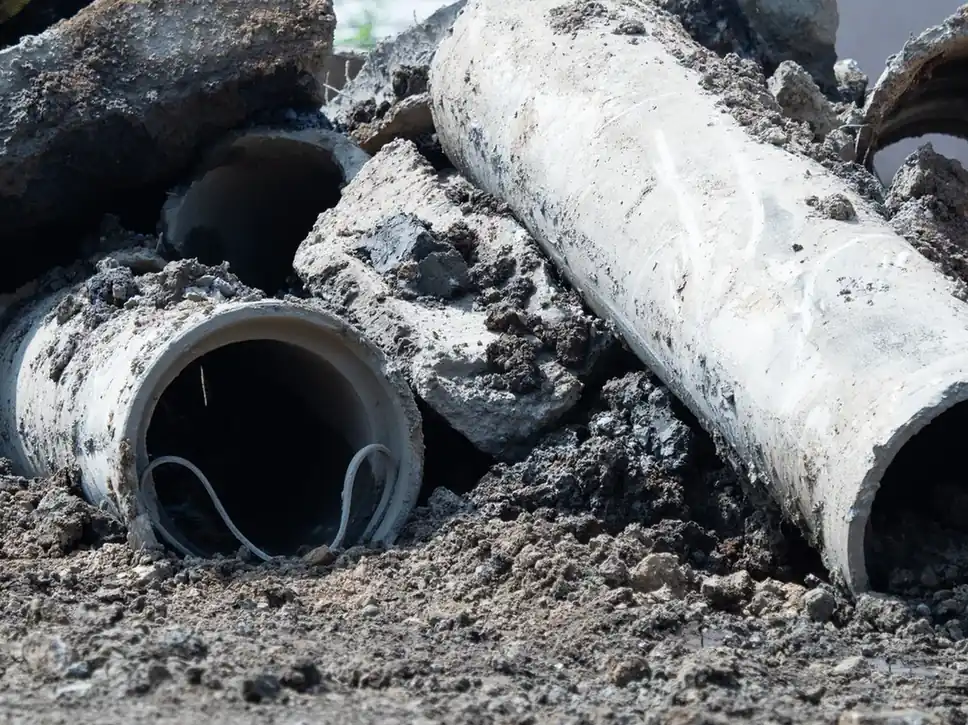
Signs that a drain may have collapsed
Some warnings are obvious. Others are easy to attribute to something else until the evidence builds up.
- Slow drainage at several fittings on the same run, not just one.
- Repeated blockages in the same place after clearing.
- Foul smells that return after cleaning, especially near an inspection chamber.
- Water pooling or sinking into the ground above a drain route.
- A dip, hollow or small depression in a path, drive or lawn.
- Damp patches on a wall or floor near where a drain passes.
- Rat activity, since rodents use broken pipes and the voids around them.
- Gurgling or a change in the sound of water leaving a fixture.
A sinkhole is the clearest sign, but it appears late. By the time soil has washed into a pipe and a void has opened at the surface, the failure has usually been developing for some time. Slow drainage and recurring blockages are earlier and more common indicators.
None of these signs proves a collapse on its own. A partial blockage, a root mass or a displaced joint can produce similar symptoms. That distinction matters because the repair differs, and so does the cost.
How CCTV helps establish the extent
A camera survey shows the internal surface of the pipe from the point of entry onward. It records the position and nature of defects, and it can show whether the run is deformed, broken or missing a section. Distance readings let the surveyor relate what appears on screen to a point on the ground, which is useful when a repair has to be planned.
There are limits. A camera sees visible internal surfaces. It cannot see through soil, and heavy silt, scale or standing water can hide the pipe wall below or behind the deposit. A survey may need cleaning first, and even then some defects sit outside the field of view. A survey is evidence, not a guarantee that nothing else exists.
Report contents and coding depend on the agreed specification. Not every survey is graded, and where a grading system is used the client should confirm which one applies before work begins. If you need a defined output, say so at the quoting stage.
For a broader view of what a survey covers, see drainage survey and drain defects found on CCTV.
Responsibility and insurance
Responsibility for a drain depends on where it sits, what it serves and which part of the UK the property is in. In England and Wales, drains within a property boundary that serve only that property are normally the owner’s responsibility, while many lateral drains and sewers serving more than one property are the sewerage company’s responsibility. The exact boundary should be confirmed rather than assumed.
Responsibility arrangements differ across the UK, and the boundary is not always obvious from the surface. Drainage records, the position of the property boundary and survey evidence can help establish which pipe is involved, but responsibility should be confirmed with the relevant sewerage authority where it is unclear.
Insurance is a separate matter. Some buildings policies include cover for accidental damage to drains, while exclusions may apply to wear, gradual deterioration or other causes. The policy wording determines the position. A survey report with distances and defect descriptions can provide evidence for an insurer or loss adjuster, but it does not decide the claim.
If you need to establish where responsibility sits, the build over agreement checker produces questions to put to the water company rather than a ruling.
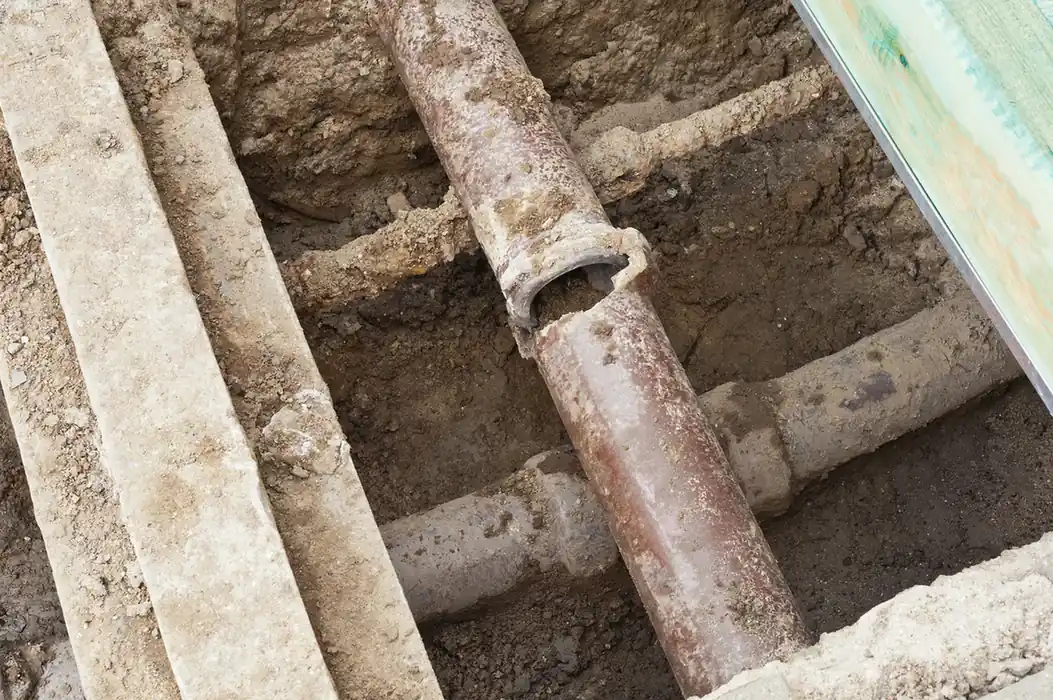
Repair routes after a survey
Once the extent is known, the options narrow. A short localised failure may suit excavation and replacement of the affected length. A longer run of cracked or deformed pipe may suit a trenchless method such as lining, which creates a new structural pipe inside the old one. Where the pipe has lost its shape entirely, lining may not be possible without first restoring the bore.
Access, depth, the presence of other services and the condition of the surrounding ground all influence the choice. So does the material. A pitch fibre pipe that has deformed behaves differently from a clayware pipe with a single cracked joint. For more on that material, see pitch fibre drains.
Where lining is being considered, the pipe condition normally needs to be assessed first. Drain survey before relining explains what that stage involves. The appropriate repair method depends on the survey findings, access and site conditions.
Where work requires entry into a confined space, it must be properly assessed and planned. Entry should be avoided where the work can reasonably be carried out from outside, and appropriate safe working and emergency arrangements are required where entry is necessary.
What a survey should tell you
A useful report answers practical questions. Where is the failure? How long is the affected section? Is the pipe deformed, broken or absent? Is the surrounding ground likely to have been disturbed? What access is needed for a repair?
It should also be honest about what was not seen. If a section could not be reached, or if deposits obscured the wall, that limitation belongs in the report. A survey that claims complete coverage of a pipe it could not fully inspect is not useful to anyone.
We can help with CCTV surveys to establish whether visible evidence indicates a collapsed drain, assess the extent that can be inspected, and give you the information needed to decide on a repair. The survey shows what is visible. The decision on method rests with you and your chosen contractor.
Free online tool
Build Over Agreement Checker
Check what to ask your sewerage company before building near a drain or sewer.
Common questions
Frequently asked questions
How do I know if my drain has collapsed rather than just blocked?
A blockage and a collapse can produce similar symptoms, including repeated problems at the same point. A CCTV survey can show whether the visible pipe wall has deformed, broken or lost a section, although deposits, standing water or restricted access can limit what can be seen.
Will my insurance cover a collapsed drain?
It depends on the policy wording and the cause of the damage. Cover and exclusions vary between policies. A survey report with distances and defect descriptions can provide evidence for the insurer or loss adjuster, but the insurer decides the claim under the policy terms.
Who is responsible for repairing a collapsed drain?
Responsibility depends on where the drain sits, what it serves and which part of the UK the property is in. In England and Wales, drains within a property boundary that serve only that property are normally the owner's responsibility, while many lateral drains and shared sewers are maintained by the sewerage company. The exact position should be confirmed where it is unclear.
Can a collapsed drain be repaired without digging?
Sometimes. A short localised failure may need excavation. A longer run of cracked pipe may suit lining, which creates a new pipe inside the old one. If the pipe has lost its shape, the bore may need restoring first. The survey findings and site conditions determine what is feasible.
Request a quote
Complete the form and we will get back to you.