
CCTV drainage surveys
CCTV Drain Survey Report
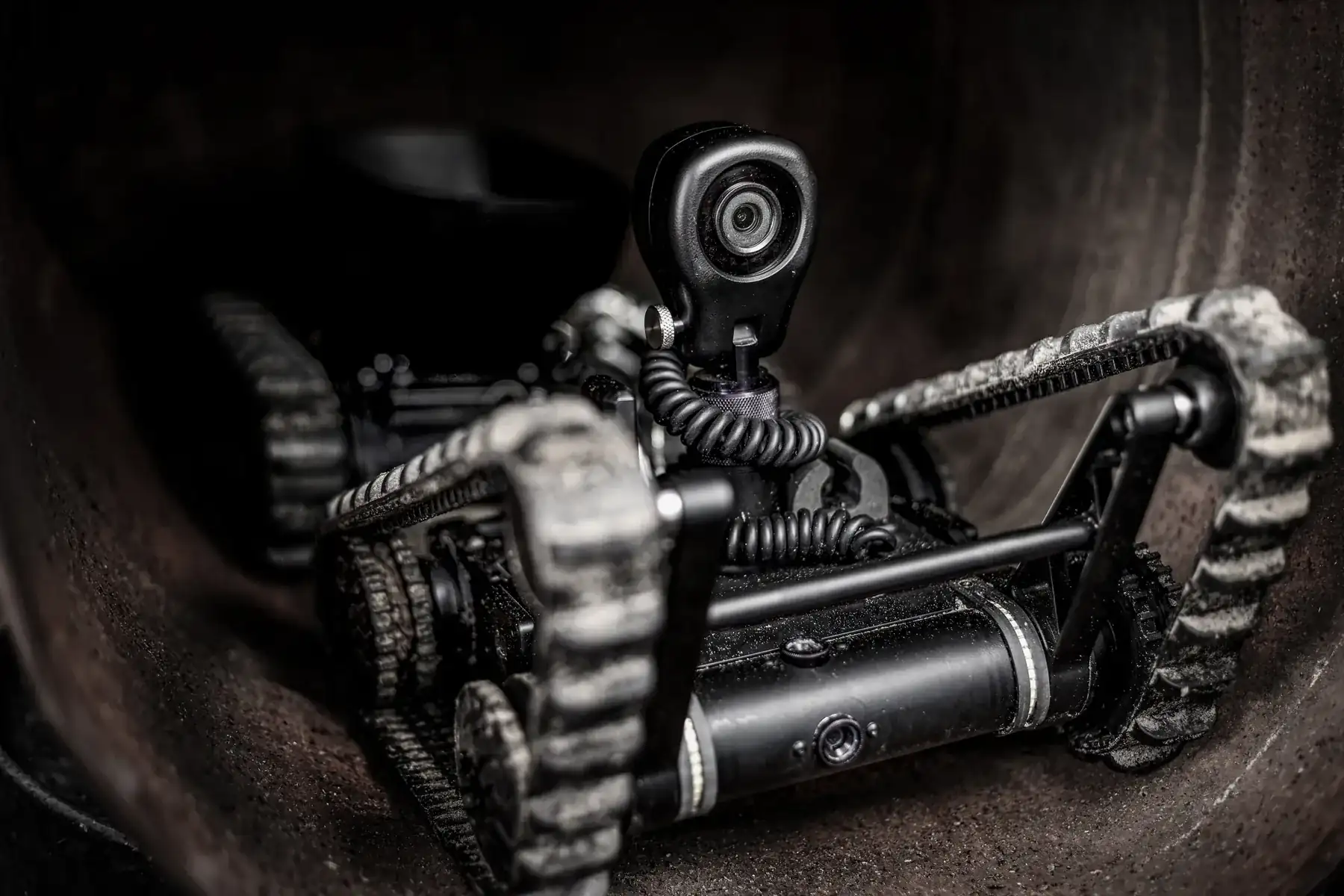
A CCTV drain survey report is the written record of what a camera saw inside a drain. It should let someone who was not on site understand the pipe layout, the condition of each section and what, if anything, needs doing next.
What a CCTV drain survey report contains
A report is more than a video. The footage shows the inside of the pipe; the report turns that footage into a record that can be checked, compared and acted on. Most reports follow a similar structure, though the detail depends on what was agreed before the survey started.
The contents of a CCTV drain survey report depend on the inspection undertaken. Typical records include:
- Header data: site address, date, weather, survey reference and the person who carried out the work.
- A plan or schematic showing manholes, pipe runs, direction of flow and section references.
- An observation log listing each defect or feature with its location, usually as a distance from a manhole.
- Structural and service condition grades for each section.
- Photographs or stills taken from the footage.
- Recommendations, which may range from no action to further investigation or repair.
- The video file itself, often supplied as a download link or on a USB stick.
Some reports contain coded defects, condition grades, a drainage plan and a video recording. Others record observations from a basic inspection. A grade is only meaningful when the report identifies the assessment method used.
Header data and why it matters
The header is the part people skip. It records who did the survey, when, and under what conditions. That matters because drain condition can change. A survey done after heavy rain may show different levels of silt than one done in dry weather. If you are comparing two reports, check the dates and conditions first.
The report should make clear which pipes were inspected. A survey of private drainage does not necessarily include the adjoining public sewer. It should also identify inaccessible chambers and runs that could not be inspected, so the recorded findings are not mistaken for a complete assessment of the site.
Reading the observation log
The observation log is the core of the report. Each line describes something seen at a specific point in the pipe. Common entries include cracks, fractures, displaced joints, roots, silt, scale, encrustation, infiltration and deformation.
Location is usually given as a distance from a reference manhole. That lets you find the same spot again. If a defect is logged at 12.4 metres from manhole 2, anyone returning to the site can measure to roughly that point and expect to find it.
Not every entry is a defect. Some logs record features such as a junction, a change in pipe material or a connection. These are useful for understanding the layout, especially on older properties where records are poor.
Codes depend on the classification system used in the report. Our MSCC5 drain survey page explains that reporting approach in more detail.
Structural and service grades
Many UK reports use a grading system that separates structural condition from service condition. Structural grades describe the pipe itself: cracks, deformation, collapse. Service grades describe what is in the pipe: silt, roots, scale and other obstructions that affect flow.
A pipe can be structurally sound but badly silted, or clear-flowing but cracked. The two grades tell you different things, and a recommendation should follow from both.
Not every survey is graded. Some surveys need only a visual record. If grades are present, check which system was used and whether the report explains it. If grades are absent, the report may still be useful, but comparing it with a graded survey is harder.
Condition coding involves professional judgement within the system being used. If a grade materially affects planned work, ask how it was derived and what observation supports it.
Recommendations and what they mean
Recommendations should follow from the observations. A report might suggest no action, monitoring, cleaning, further survey or repair. It might also recommend a different technique, such as a sonar survey where the pipe is full of water and the camera cannot see the invert.
Be cautious with recommendations that do not reference the observations. If a report recommends lining but the log shows only minor silt, ask why. Equally, a report that shows a displaced joint but recommends no action should explain why that joint is not a concern.
Recommendations are not instructions. They are a professional view based on what was visible at the time. You are free to seek a second opinion, especially before committing to expensive work.
Footage, stills and plans
Where footage is included, review it alongside the observation log. The recorded images and distance references should support the observations within the limits of visibility and access noted in the report.
Stills are selected frames. They are useful for reports and quotes but they are not the whole story. A still cannot show how a defect changes over a run.
The plan shows the layout. On older properties, the plan may provide a useful record of the drainage layout. Keep it with the report. If you are planning work, the plan can also help contractors understand the layout when preparing a quote.
What a report cannot tell you
A CCTV survey shows visible internal surfaces. It cannot detect every defect. A crack that has not opened, a void behind the pipe wall or a defect hidden by silt or scale may not appear. The camera sees what it can see.
Debris can conceal fractures, open joints and damage along the pipe invert. Standing water may hide the lower part of the pipe wall entirely. Where visibility is poor, the report should record the limitation rather than treat the hidden section as free from defects. Submerged sections may need other inspection methods, including sonar where suitable.
Water company requirements vary. If a report is needed for a build over agreement or adoption, confirm what the water company expects before the survey is specified. A report that meets one company’s requirements may not meet another’s.
Getting a second opinion on a report
Existing CCTV reports can be difficult to interpret, particularly where defect codes or condition grades are used. The footage can help distinguish the recorded observation from the surveyor’s interpretation. A defect’s position, severity and effect on drainage all matter when considering whether repair is necessary.
We can also help with homebuyer drain surveys, build over CCTV surveys and MSCC5 drain surveys where a graded report is needed. If you are comparing costs, see our guide to CCTV drain survey cost.
For safety-critical work such as confined space entry, competent specialist work is required. Do not attempt entry yourself.
Free online tool
Build Over Agreement Checker
Building over or near public drains and sewers
Common questions
Frequently asked questions
How long should a CCTV drain survey report be?
There is no standard length. A domestic inspection covering a few short runs may need only a brief report. A commercial drainage system with many chambers and pipe sections can require substantially more detail. The report should identify the inspected runs, findings and any sections that could not be assessed.
What do the grades in a drain survey report mean?
Grades usually separate structural condition from service condition. Structural grades describe the pipe itself, such as cracks or deformation. Service grades describe what is in the pipe, such as silt or roots. The exact scale depends on the system used, and not every survey is graded.
Can I use a CCTV drain survey report as proof of condition?
A report is a record of what was visible at the time of the survey. It shows visible internal surfaces and cannot detect every defect. It is useful evidence, but it is not a guarantee that no other issues exist.
What if my report does not include a plan or footage?
Not every CCTV report includes a drainage plan or video file. A written record may be sufficient for a limited inspection, but footage and a plan can be important when defects must be located precisely or the findings reviewed by another party.
Can you review a report I already have?
An existing report can be examined alongside its footage and drainage plan, where available. That can help establish which defects were actually recorded, how their positions were identified and whether the evidence supports the recommended repairs.
Request a quote
Complete the form and we will get back to you.