
CCTV drainage surveys
CCTV Drain Inspection
A CCTV drain inspection puts a camera inside a pipe to record what the internal surfaces look like. The kit chosen depends on pipe diameter, access and whether the drain needs cleaning before anything useful can be seen.
What a CCTV drain inspection records
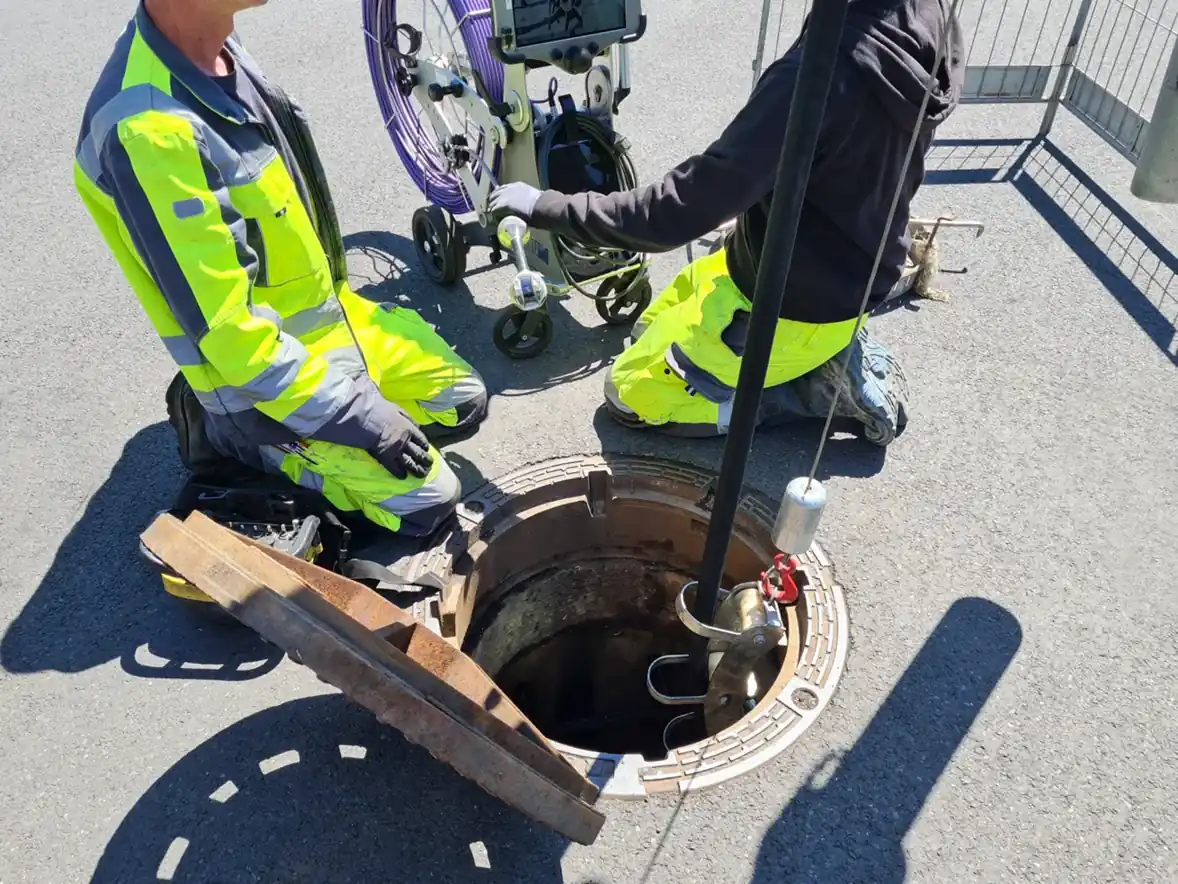
A CCTV drain inspection is a recorded pass along the inside of a drain or sewer using a camera mounted on a flexible rod or, where suitable, a wheeled crawler. It can show visible internal surfaces, including pipe material, joints, connections, changes in direction, standing water, debris, roots, cracks, displaced joints and deformation. Depending on the equipment and survey specification, the recording can include distance references so observations can be tied to positions along the run.
What the camera does not do is see through deposits, soil or standing water. A pipe that is half full of silt will hide the lower half of the bore. A pipe running full will hide almost everything below the waterline. That is why cleaning before inspection is often part of the job, and why a survey report should state the pipe condition at the time of the pass rather than claim the whole pipe was visible.
We can help with drain camera inspection where the aim is to record condition, locate a defect or confirm what a repair needs to address.
Push rod cameras for smaller drains
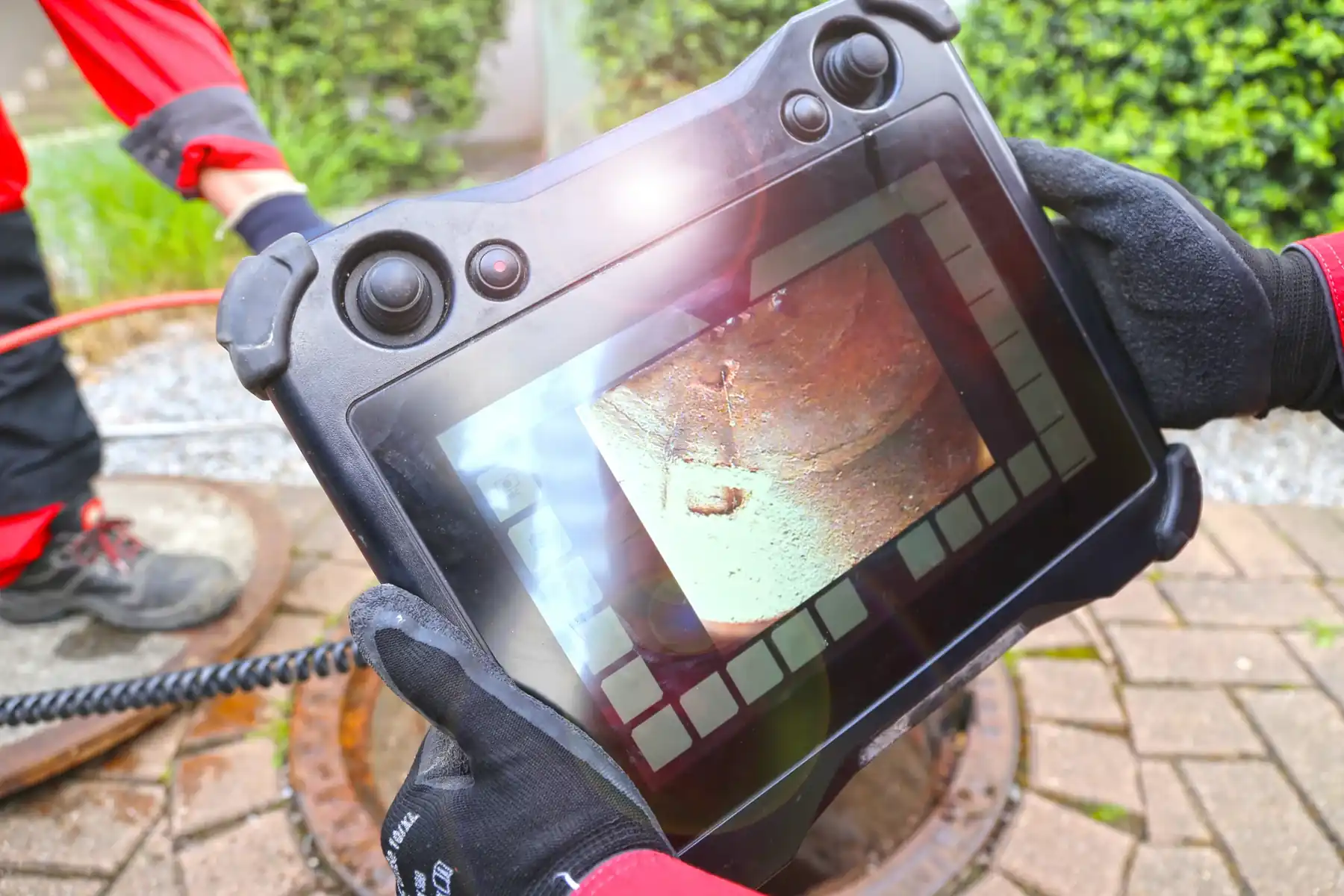
Push rod cameras are commonly used on smaller drainage where the pipe size, bends and access allow the rod to travel. The camera head sits on a semi rigid rod that is pushed along the pipe from a suitable access point while the operator watches the image in real time.
Push rods suit domestic and light commercial drainage because the pipe sizes are small and the runs are often short. The limitation is reach and friction. A rod will not push around a sharp bend or through a badly displaced joint. If the camera stops, the reason matters. Possible causes include a collapse, a build up of scale, a root mass or simply a tight bend the rod cannot pass. The report should record what was visible before the camera stopped and avoid stating a cause that the footage does not establish.
Crawler cameras for larger pipes
Wheeled crawler systems can be used on larger pipes where the diameter, access and pipe condition suit the equipment. The crawler carries the camera and lighting on a driven chassis, with the setup selected for the pipe and survey scope.
Crawler systems are used on sewers and other larger drainage where access permits. Some systems use pan and tilt camera heads so the operator can inspect the pipe wall, crown and connections rather than looking only straight ahead. This can help assess features that need a closer view.
Access matters more with a crawler. The machine needs a chamber wide enough to lower it in and a pipe clear enough to drive along. A heavily silted sewer may need jetting before a crawler can pass. See high pressure jetting for how cleaning is planned around a survey.
Lateral launch and sonde location
A lateral launch camera is used where the main line is accessible but a branch connection needs its own pass. The camera is sent up the lateral from the main sewer, or along a branch from a chamber, to record the connection and as much of the branch as access and equipment allow. This is common where a property drains into a public sewer and the connection itself is in question.
A sonde is a small transmitter fitted to the camera head or the crawler. Above ground, a locator picks up the signal and gives a position and depth for the camera. That lets the operator mark the line of the pipe on the surface and estimate how deep a defect sits. A sonde does not replace a full drain map. It gives points along a run, and the accuracy depends on the locator, the depth and what is in the ground. For a full record of the layout, see drain mapping.
Access points and preparation
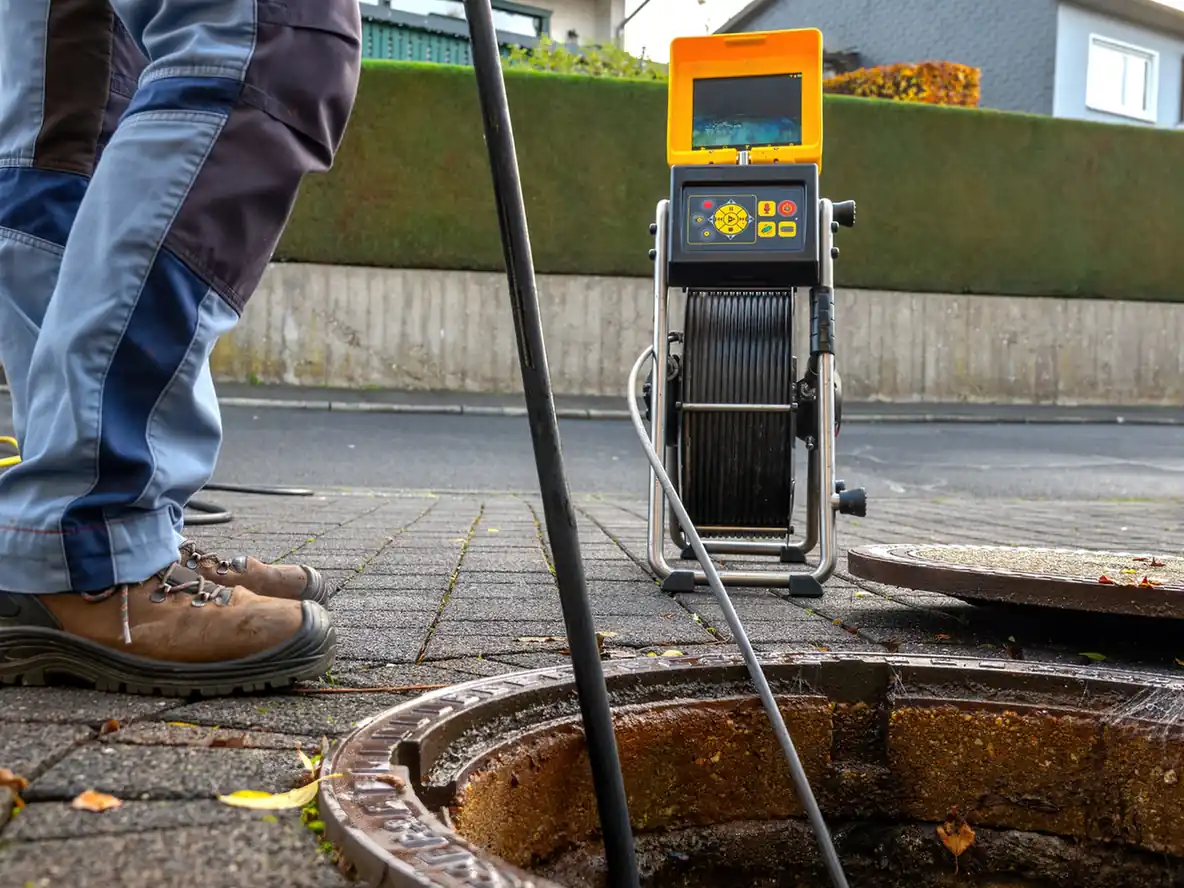
A camera needs a way in. Manholes and inspection chambers are the usual entry points. Rodding eyes, gullies and open pipe ends can work for smaller rods. If a chamber is buried, damaged or full of silt, access has to be sorted before the camera can be used. Some surveys need a chamber to be cleared or a lid lifted, and some need a temporary access point.
Water in the pipe is the other common obstacle. A slow running drain may hold enough water to hide the invert. Jetting or bailing before the pass can improve what is visible, but it does not change the pipe condition. It only changes what the camera can see. The report should note that the pipe was cleaned before inspection if that is what happened.
Confined space work is a separate matter. A camera pass from outside a chamber avoids entry in most cases. Where entry is unavoidable, the work is competent specialist work under a safe system and the relevant regulations apply. The HSE confined spaces legislation page sets out the duties, including avoiding entry where possible.
DIY cameras and specified surveys
A DIY or hired drain camera can be useful for a basic look inside an accessible pipe. If the result is needed by a purchaser, insurer, sewerage company or other third party, check what evidence and report format they require. A professional condition survey can be specified to provide recorded footage, distance-referenced observations, coding or other deliverables where those are needed.
Condition coding follows a recognised system where the survey is specified that way. Not every survey is graded. A quick look for a blockage is not the same as a condition survey with coded defects. The CCTV drain survey report page explains what a report contains and how coding depends on the agreed specification. For the wider method, see how does a CCTV drain survey work.
Limits of camera evidence
Camera surveys show visible internal surfaces. They cannot detect every defect. A hairline crack that is not open at the time of the pass may not show. A defect behind a deposit or below the waterline may be missed. A pipe that looks sound on camera can still leak, and a pipe that looks rough can still carry flow. The survey is evidence of what was visible on the day, at the distances recorded, under the conditions noted.
Where a defect is suspected but not seen, other methods may help. Dye testing can trace a connection or confirm a leak path. A sonde can mark a position. A second pass after cleaning can reveal more. None of these methods proves that a pipe is free of defects. They add to the picture.
We can help with CCTV drain inspections for domestic, commercial and developer drainage, including surveys before repair, before purchase and before adoption. If you need a survey specified for a particular purpose, tell us what the report has to support so the method and coding match.
Free online tool
Build Over Agreement Checker
Check what to ask your sewerage company before building near a drain or sewer.
Common questions
Frequently asked questions
What size drain can a CCTV camera inspect?
Camera choice depends on pipe diameter, access, bends, condition and the survey equipment available. Push rod systems are commonly used on smaller drains, while crawler systems can be suitable for larger pipes. The supplier should confirm the practical range for the site.
Does a drain need cleaning before a CCTV inspection?
Often yes. Silt, scale, grease and standing water hide the pipe wall. Cleaning before the pass improves what the camera can see, but it does not change the pipe condition. The report should note whether cleaning took place before inspection.
Can a CCTV drain inspection find every defect?
No. A camera shows visible internal surfaces. It cannot see through deposits, below the waterline or behind the pipe wall. Some defects are not visible at the time of the pass, and the report should state the conditions and limits of the survey.
Is a hired drain camera as good as a professional survey?
A hired camera can be useful for a basic inspection, but it may not provide the evidence or report format required by a third party. If the result is for a purchase, insurance matter, sewerage-company application or specified condition survey, check the required deliverables before choosing the method.
What is a sonde used for in drain inspection?
A sonde is a transmitter fitted to the camera or crawler. A locator above ground picks up the signal and gives a position and depth for the camera. It helps mark the line of the pipe and estimate where a defect sits, but it does not replace a full drain map.
Request a quote
Complete the form and we will get back to you.