
CCTV drainage surveys
MSCC5 Drain Survey
MSCC5 is the WRc Manual of Sewer Condition Classification, fifth edition, used to record observations during CCTV surveys of drains and sewers. It provides standardised codes for findings such as cracks, roots and deformation. We can help with MSCC5-coded surveys where this reporting standard is required.
What MSCC5 means for a drain survey
MSCC5 stands for the Manual of Sewer Condition Classification, fifth edition, published by WRc. It provides a standardised method for recording observations found during CCTV surveys of drains and sewers and is used alongside the coding framework in BS EN 13508-2. When a survey is specified to MSCC5, observations are recorded using defined codes and positional information so that the results can be reviewed consistently.
The manual itself is a licensed WRc publication. Where MSCC5 reporting is required, the required edition and any additional reporting or grading specification should be confirmed before the survey is commissioned.
Observation codes and condition grading
MSCC5 is principally concerned with recording observations consistently. A report or asset-management process may also apply a condition grading or scoring method to those observations, but the grading method should be identified rather than assumed from the words MSCC5 alone.
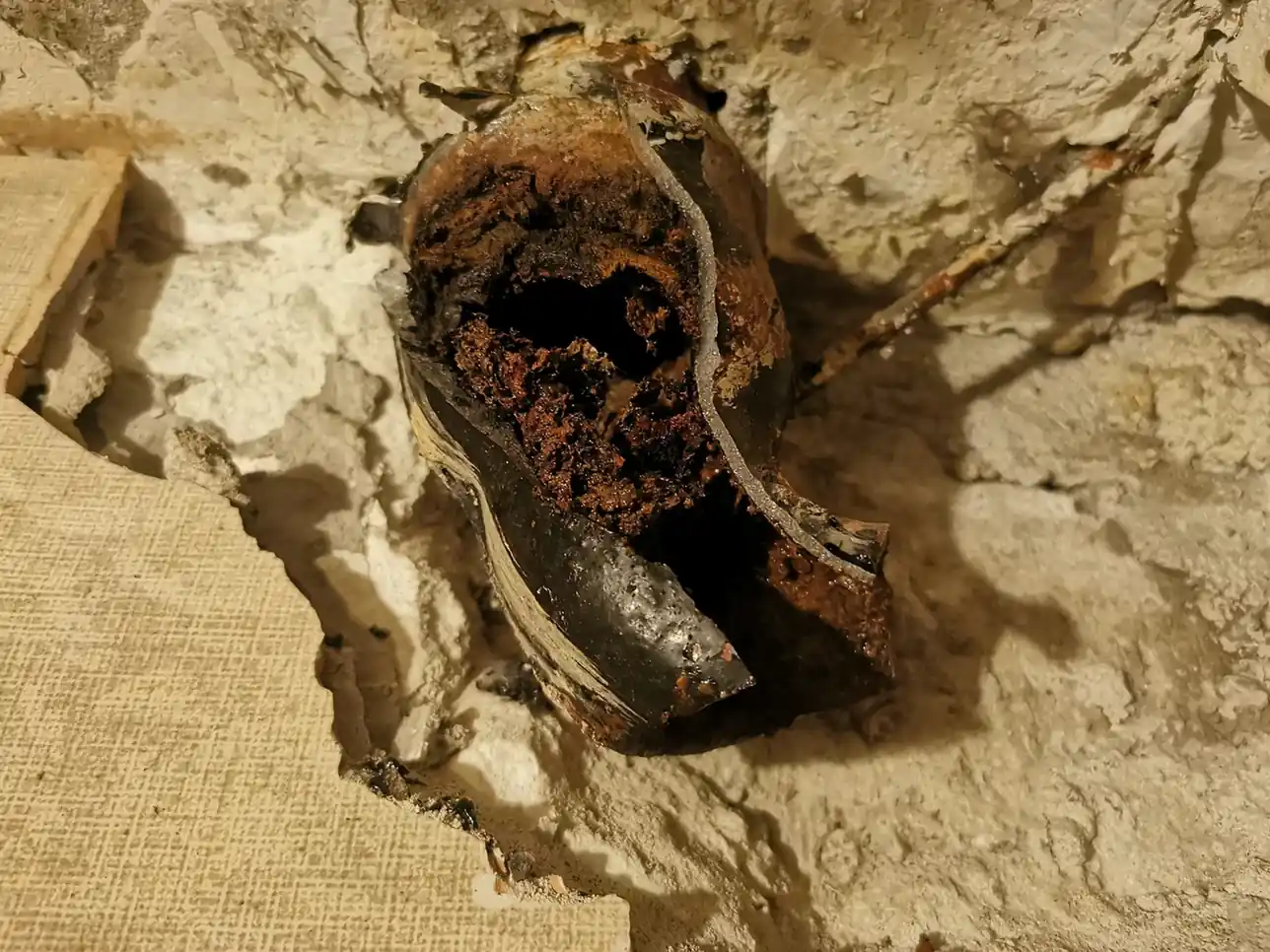
Structural observations can include defects such as cracking, fracture, deformation or collapse. Service-related observations can include matters such as roots, deposits and infiltration. The significance of an observation depends on its type, extent, position and the purpose of the assessment.
Why the reporting method matters
For adoption, build over or asset-condition work, the organisation reviewing the survey may specify the coding, grading and report format it will accept. Confirm that specification before commissioning the survey rather than relying on a generic reference to MSCC5.
What an MSCC5 survey records
An MSCC5 survey records observations along the pipe run with positional information required by the survey specification. Common observations can include:
- Cracks, fractures and broken pipe
- Deformation, ovality and cross-sectional loss
- Root ingress and other obstructions
- Deposits, silt and encrustation
- Visible infiltration and other water-entry observations
- Connection defects and protruding laterals
- Surface damage and lining defects
The survey also records pipe material, diameter, direction of flow and access points where these can be confirmed. Not every defect is visible. A CCTV survey shows the internal surfaces that the camera can see. Deposits, standing water or a damaged camera view can hide defects further along. The report should note any limitations, including sections that could not be surveyed.
MSCC5 codes and the drain relining code decoder
MSCC5 uses defined codes to record observations such as fractures, root intrusion and deformation. The code alone does not determine the appropriate response. Its location, extent, surrounding observations and the purpose of the survey also matter. If you need to understand an individual finding, our drain defects page explains common observations in plain English. For relining decisions, the drain survey before relining page covers what a survey needs to show before a liner is specified.
Do not treat a code as a repair instruction. A code describes what was seen. The repair method depends on the defect, the pipe material, access and the consequences of failure.
Why consistent coding matters for adoption and build over
Where adoption or build over procedures require a CCTV survey, standardised coding can make the observations easier for the receiving organisation to review. The required coding, survey extent and acceptance criteria should be confirmed for the particular project. Our Section 104 adoption CCTV survey and build over CCTV survey pages explain those contexts.
MSCC5 coding does not guarantee acceptance of a submission. The organisation reviewing the work may require a particular survey specification, report format or additional evidence. Confirm those requirements before the survey is commissioned.
Operator competence and survey specification
Consistent coding requires appropriate knowledge and experience. When commissioning a survey, confirm the coding standard and edition required, the report format and how survey limitations will be recorded. Where the recipient of the report requires particular operator qualifications or evidence of competence, include that requirement in the survey specification.
The survey specification should also cover access, cleaning, flow conditions and the level of reporting. A survey of a small domestic drain and a survey of a trunk sewer are different jobs. The specification should match the purpose. If the purpose is adoption, the authority’s requirements should be confirmed first. If the purpose is build over, the water company’s requirements should be confirmed first.
Limits of an MSCC5 survey
An MSCC5-coded CCTV survey records observations visible during the inspection. It is not a structural calculation, geotechnical assessment or guarantee of future performance. Deposits, standing water, obstructions and access limitations can prevent parts of a pipe from being inspected. The report should identify the surveyed extent and any material limitations.
Where an observation needs further action, the appropriate next step depends on the pipe, the extent of the finding and the purpose of the survey. We can help with MSCC5-coded drain surveys and with obtaining the reporting needed for your project.
Related guidance
For a wider view of survey methods, see our sewer CCTV survey and drainage survey pages. For commercial and industrial sites, the commercial drain survey page covers larger networks and access constraints. If you are buying a property, the homebuyer drain survey page explains what a buyer may need to know.
For building regulation guidance in England, see Approved Document H. For work involving confined spaces, see the HSE confined spaces legislation page.
Free online tool
Build Over Agreement Checker
Check what to ask your sewerage company before building near a drain or sewer.
Common questions
Frequently asked questions
What does MSCC5 stand for?
MSCC5 stands for the Manual of Sewer Condition Classification, fifth edition, published by WRc. It provides standardised coding for observations recorded during CCTV surveys of drains and sewers and is used with the relevant BS EN 13508-2 coding framework.
Is MSCC5 the same as BS EN 13508-2?
They are related but not identical. BS EN 13508-2 is the European standard for condition classification. MSCC5 is a UK manual that aligns with that standard and provides coding rules and guidance for surveyors working in the UK.
Does MSCC5 itself give a condition grade?
MSCC5 provides the codes used to record survey observations. Separate grading methods can use those coded observations to produce condition assessments. For example, WRc Sewer Risk Management uses MSCC codes to derive Internal Condition and Operational grades. The grading method used should be identified in the report.
Does an MSCC5 survey guarantee that a water company will accept my submission?
No. MSCC5 coding helps a reviewer check the survey against a standard, but the water company or adopting authority applies its own requirements. Those requirements differ between England, Wales, Scotland and Northern Ireland. Confirm them before you commission the survey.
Can I use an MSCC5 report as proof that a drain is legally compliant?
No. A survey report records what was seen at the time. It supports traceability and decision making, but it does not prove legal compliance on its own. Legal duties depend on the specific circumstances and the relevant regulations.
Request a quote
Complete the form and we will get back to you.