
CCTV drainage surveys
Sewer CCTV Survey
A sewer CCTV survey records the visible internal condition of a pipe while the camera travels through it. The result depends on access, flow, cleaning and the reporting specification agreed before work starts. We can help with sewer surveys where condition data is needed for maintenance or planning.
What a sewer CCTV survey covers
A sewer CCTV survey is a recorded inspection of the inside of a pipe using camera equipment suited to the pipe and access available. As the camera travels through the pipe, visible defects, features and connections can be recorded against the distance travelled. Larger or more complex sewers may require crawler or pan and tilt equipment depending on the survey specification.
The survey is only as useful as its access. Manholes, inspection chambers and rodding points set the start and end of each run. If an access point is buried, damaged or unsuitable for the equipment, that section may need another approach. Flow also matters because water can obscure the invert and other parts of the pipe. Where flow restricts the view, the survey may need a lower-flow window or other suitable flow-management arrangements.
We can help with sewer CCTV surveys on networks where condition data is needed for maintenance, rehabilitation or adoption. The survey method and equipment should be selected to suit the pipe, access conditions and required output.
Camera equipment and pipe size
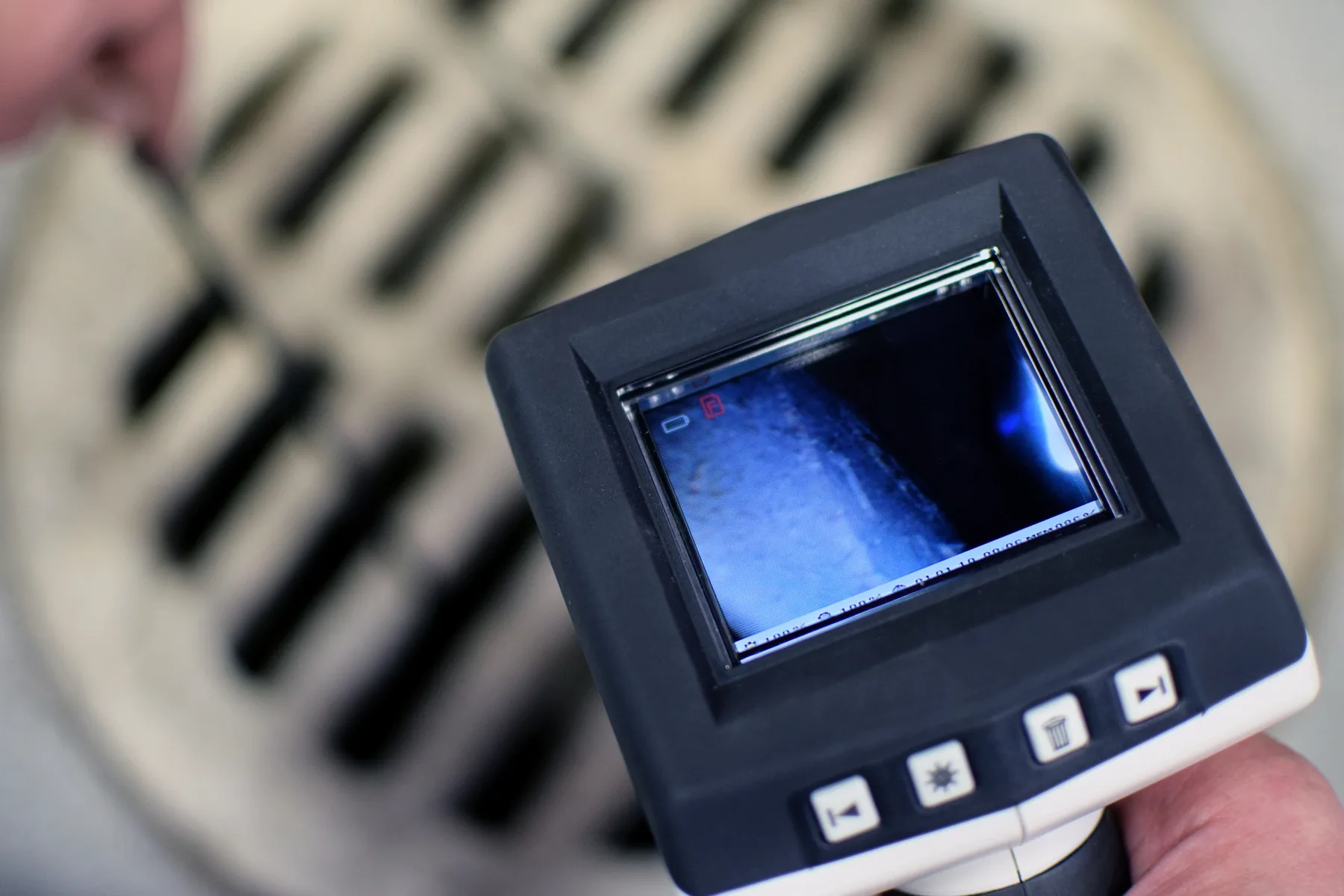
The camera system is selected to suit the pipe diameter, access and condition. Push rod cameras are commonly used on smaller drains and connections, while crawler systems are used where the pipe and access allow. Bends, displacement, silt and debris can all limit how far equipment can travel.
Pan and tilt cameras can provide a closer view of features around the pipe wall. Specialist systems such as profiling or lateral inspection may also be specified where the project requires measurements or inspection beyond the main run. The equipment and output should be agreed for the purpose of the survey rather than assumed from pipe size alone.
Very large pipes and culverts may require a different inspection method. Where work falls within the definition of a confined space, entry should be avoided where the task can be completed from outside. If entry is unavoidable, the work requires a suitable safe system and emergency arrangements. See the Confined Spaces Regulations 1997.
Coding and condition grading
Some sewer CCTV surveys are coded to a specified condition-classification standard. MSCC5 is used for sewer condition coding in the UK, but it should only be specified where it is required for the job. The agreed survey specification determines how defects and features are recorded and reported.
Coding depends on what is visible in the footage and the standard being applied. Deposits, water or restricted access can limit the assessment, so the report should make clear where the view or survey run was incomplete.
Not every survey is graded. Some clients ask for a condition survey with coded defects but no overall grade, or for a specific format used by their asset management system. The agreed specification should set out the coding standard, the level of detail and the report format before the survey starts. If a survey is intended for capital planning or rehabilitation design, the coding needs to be consistent with the way the asset data will be used.
Traffic management, permits and working hours
Sewer surveys in roads, verges and public areas may require traffic management, permits or other access arrangements before work can start. The requirements and notice periods depend on the location, highway authority and proposed method. Night working may be possible on some sites but can be restricted by permit, noise or access conditions.
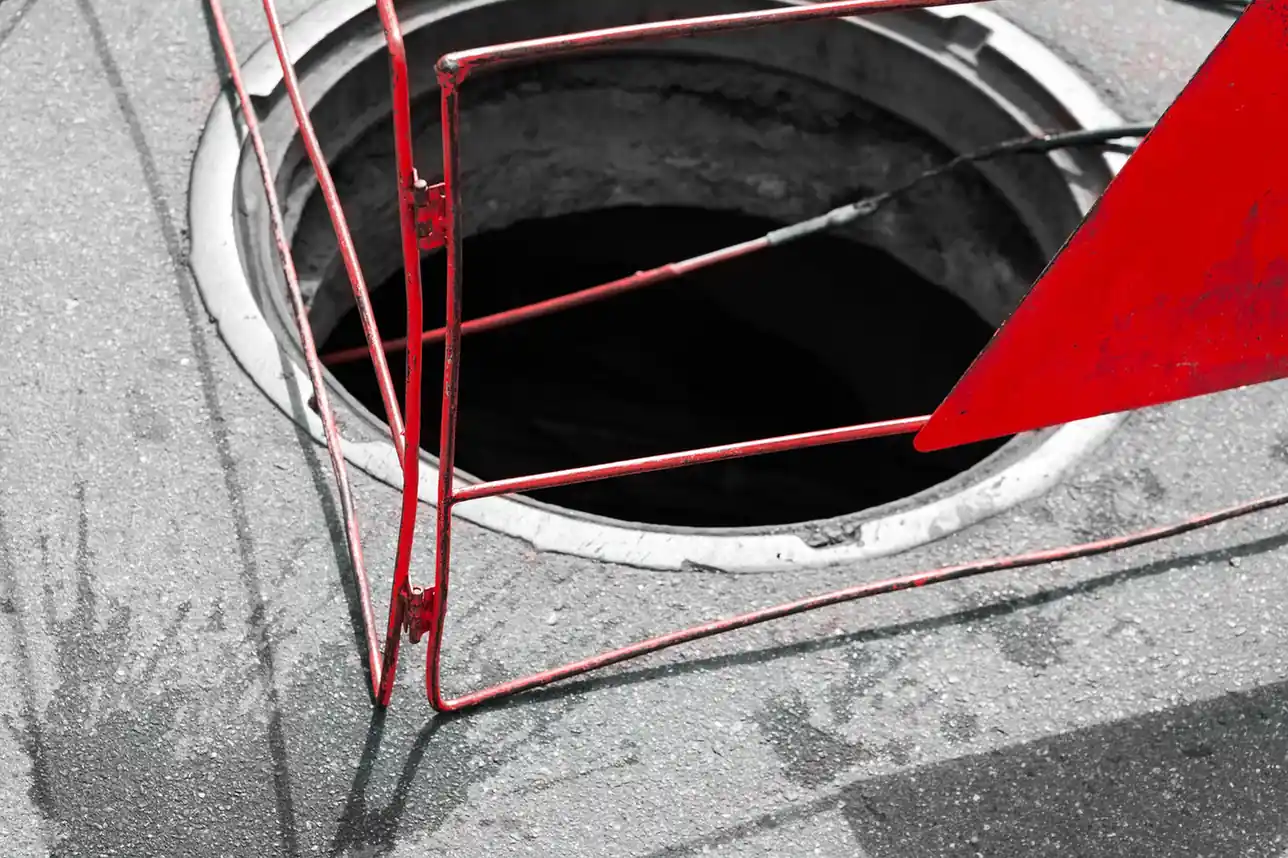
Access to manholes in live carriageways needs planning. The survey team needs a safe place to work, and the public needs to be kept away from open chambers. On highways, the requirements of the relevant highway authority apply. On private land, the landowner or occupier controls access. Where a sewer crosses a boundary, the survey may need permission from more than one party.
We can help with sewer CCTV surveys where traffic management, permits and working hours need to be coordinated with the survey itself.
What the survey can and cannot show
A CCTV survey shows the visible internal surfaces of the pipe. It can reveal cracks, fractures, open joints, displacement, deformation, roots, debris, encrustation and infiltration. It can record visible lateral connections and their condition where they can be seen. It can also record the position of defects against the distance from the access point.
It cannot see through deposits, silt or standing water. It cannot detect every defect, particularly those that do not affect the visible surface. A pipe that looks sound on camera may still have a structural problem that is not visible from the inside. A survey is a snapshot of the pipe at the time of inspection, not a guarantee of its future performance.
Where a defect is found, the next step depends on its type, severity, pipe material, access and the purpose of the investigation. Further cleaning, repair assessment or another survey may be needed before a repair method is chosen. A survey before relining can help establish the visible pipe condition and preparation requirements.
Survey data for rehabilitation and adoption
Condition data from sewer CCTV surveys can support rehabilitation planning. A survey records visible condition at the time of inspection, while comparable surveys carried out over time may help identify changes in recorded condition. The findings can be considered alongside other project information when repair, relining or replacement options are assessed.
For adoption, CCTV surveys may be required at particular stages and to a specification set by the adopting body. Confirm the required survey standard, reporting format and timing before the work is arranged.
Where a survey is part of a wider project, it often sits alongside cleaning, lining or desilting. A survey before cleaning may show debris that needs removing first. A survey after cleaning gives a clearer view of the pipe wall. The order of work should be planned so that each stage gives useful information for the next.
Related work
Sewer CCTV surveys are often carried out with other drainage work. Sewer desilting removes silt and debris that would otherwise hide the pipe wall. Sewer jetting clears deposits before a survey or after a defect is found. Sewer lining may follow where the survey shows a pipe that can be rehabilitated rather than replaced.
For developers and housebuilders in England and Wales, a Section 104 adoption CCTV survey may be required as part of the adoption process. For smaller properties, a homebuyer drain survey covers the drains serving a single building. Where a build-over agreement is involved, a build over CCTV survey can record the sewer condition at the stage required by the relevant sewerage undertaker.
We can help with sewer CCTV surveys where condition data is needed for maintenance, rehabilitation or adoption. The survey specification, access arrangements and coding standard should be agreed before work starts so that the report meets its intended use.
Free online tool
Build Over Agreement Checker
Check what to ask your sewerage company before building near a drain or sewer.
Common questions
Frequently asked questions
What is the difference between a sewer CCTV survey and a drain survey?
The equipment and coding can be similar, but a sewer survey usually covers a larger pipe or a network rather than the drains serving one property. Sewers may be public or private, and the access, flow and traffic management requirements are often different. The specification should match the pipe size and the purpose of the survey.
Does a sewer CCTV survey need cleaning first?
Not always, but deposits, silt and standing water can hide the pipe wall. Where the survey is intended to assess condition, cleaning before the camera runs often gives a clearer result. The order of work should be planned so that cleaning does not remove evidence that the survey needs to record.
What is MSCC5 coding?
MSCC5 is a sewer condition-classification standard used to record defects and features seen during CCTV surveys. It should be used where the client or project specification requires it, and the report should state the coding standard applied.
Can a sewer CCTV survey be carried out at night?
Night working is sometimes used to reduce traffic disruption, but it depends on local restrictions and the nature of the site. Noise, lighting and access requirements may limit when work can take place. The survey plan should account for permit conditions and any local constraints.
Does a sewer CCTV survey show everything wrong with the pipe?
No. A CCTV survey shows the visible internal surfaces of the pipe at the time of inspection. It cannot see through deposits or standing water, and it cannot detect every defect. A pipe that looks sound on camera may still have a structural problem that is not visible from the inside.
Request a quote
Complete the form and we will get back to you.