

CCTV drainage surveys
Root Ingress Drain Survey
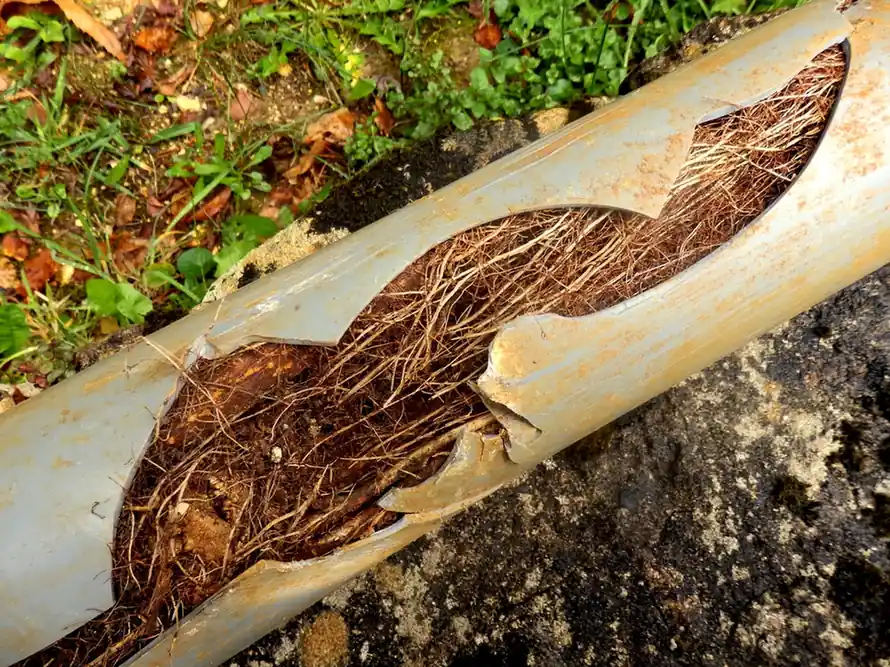
Roots enter drains through joints, cracks and poor connections, then spread inside the pipe where water and nutrients are available. A CCTV survey records where this has happened, how much of the bore is affected and what the pipe condition is around each entry point.
What root ingress in a drain looks like
Roots usually enter through an existing opening such as a displaced joint, crack, failed seal or damaged section of pipe. Fine roots can enter first and thicken as they grow. Inside the pipe they can trap debris, restrict flow and contribute to blockages.
On a CCTV survey, root ingress often appears as white or pale strands against the darker pipe wall. At a joint, roots may show as a fringe or tuft. In a crack, they can appear as a fan or curtain. Where the pipe has been cleaned recently, roots may look cut back but still present. Where cleaning has not been possible, the camera may only show a dark mass with little detail.
Root ingress is not the same as a root mass that has entered through a collapsed section. The distinction matters because the repair options differ. A CCTV survey can show the difference when the pipe is visible and the camera can pass the affected length.
How CCTV distinguishes roots from other obstructions
Not every obstruction in a drain is a root. Grease, scale, silt, rags, wipes and displaced pipe fragments can look similar where visibility is poor. The surveyor compares the obstruction with the visible pipe wall and records what can be identified from the footage.
Roots typically have a branching structure and attach to the pipe wall at a point. They may move slightly with water flow. Grease tends to coat the wall and reduce the bore gradually. Scale is often hard and pale but does not branch. Silt sits at the invert and moves when the flow rises. A displaced pipe fragment has sharp edges and may be attached to a joint.
The survey report should describe what was seen and where. It should not claim to identify every defect. Camera surveys show visible internal surfaces. They cannot see through deposits, and they cannot detect defects that are hidden behind a lining, a heavy root mass or a full pipe. If the drain is not clean enough to see the pipe wall, the survey may need to be repeated after cleaning.
Cleaning before a root ingress survey
Roots hold debris. A drain that has not been cleaned for some time may be partly or fully blocked. If the camera cannot pass, the survey cannot record the full length. In that case, cleaning is usually needed before the survey. Cleaning methods include high pressure water jetting, rodding and, in some cases, mechanical cutting. The method depends on the pipe material, diameter, access and the risk of damaging a pipe that is already weak.
Cleaning does not remove the entry point. Roots can grow back if the opening remains. Cleaning can, however, allow the camera to see the pipe wall and the entry points. That helps inform whether a local repair, lining or replacement should be considered.
After cleaning, some roots may be cut back but still visible at the joint. The survey should record this. A clean pipe with no visible roots is not proof that roots will not return. The report can only describe the condition at the time of the survey.
Finding entry points and assessing pipe condition
The entry point is the place where roots first entered the pipe. It may be a joint, a crack, a hole or a connection. On CCTV, the entry point is often where the root mass is attached to the wall. The survey should note the distance from the access point, the pipe diameter and the pipe material if it can be identified.
Pipe condition around the entry point matters. A localised opening may have different repair options from a pipe with significant deformation, displacement or missing sections. The survey can record visible cracks, fractures, deformation, displaced joints and surface damage. It cannot confirm the structural condition of the pipe beyond what is visible.
Root ingress is often associated with joints, cracks and other openings in older drainage, particularly where trees or shrubs are nearby. The useful part of the survey is identifying where the roots enter and how much of the pipe is affected, rather than simply recording that roots are present.
Repair decisions after a root ingress survey
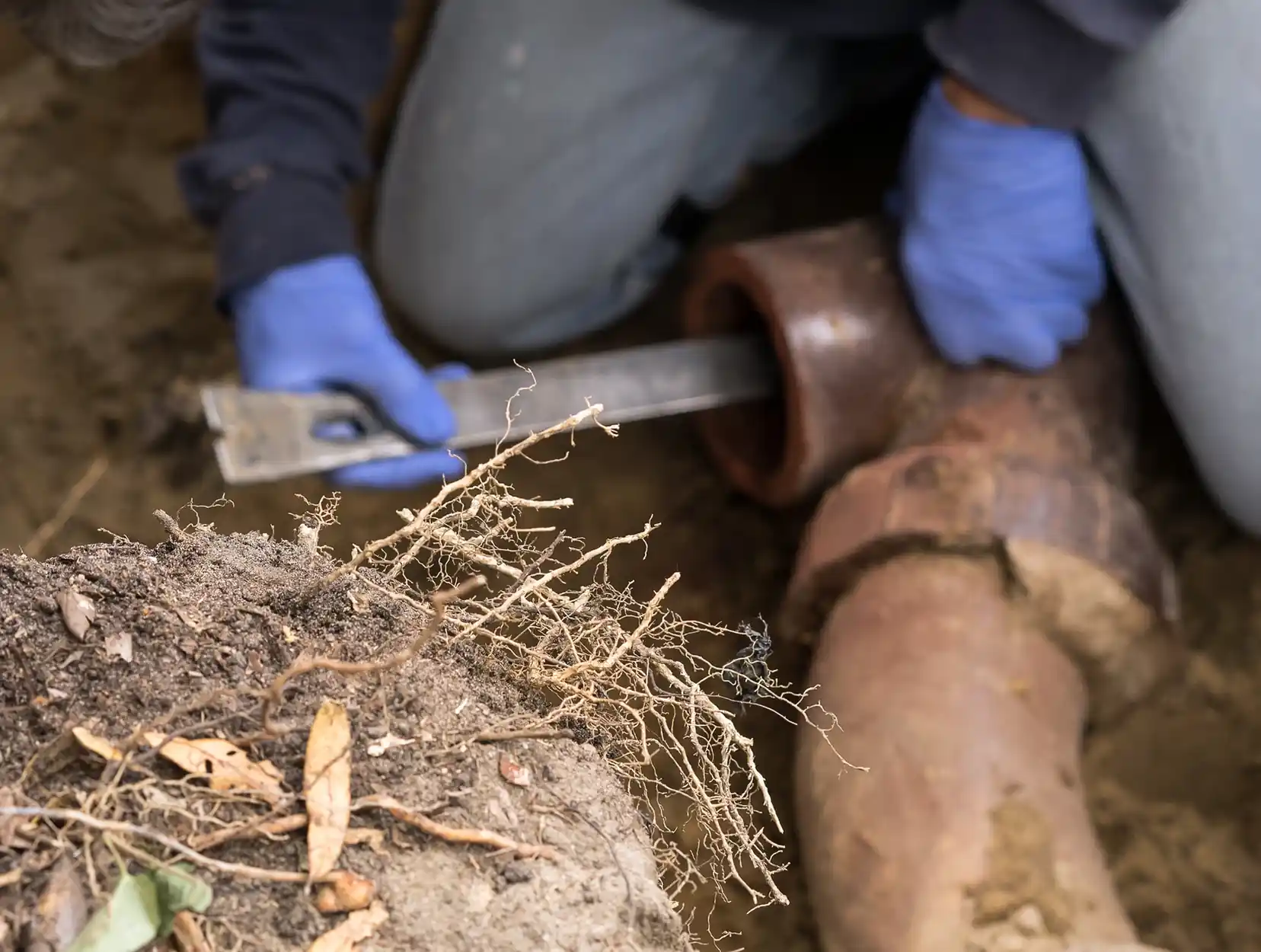
The survey findings inform the repair decision. Options may include:
- Local repair of a joint or crack where the pipe is otherwise sound.
- Relining a length of pipe to cover the entry point and restore a smooth bore.
- Replacement of a damaged section where the pipe has lost structural integrity.
- Ongoing maintenance where roots cannot be permanently excluded and the pipe remains serviceable.
Removing roots does not prevent them returning if the entry point remains. The survey helps show whether the issue is limited to a joint or crack, or whether wider pipe damage needs to be considered before cleaning or repair is specified.
Where a repair involves work near or over a public sewer, the relevant sewerage company may have requirements. These should be confirmed before work is specified. A build over agreement is a separate matter from a root ingress survey. The build over CCTV survey page explains what a survey for that purpose can show.
What a root ingress survey report should include
A useful report records the survey specification, the access points used, the direction of travel and any limitations. It should include the pipe diameter, material where identifiable, and the distance to each defect. Root ingress should be described with its location and extent. The report may use a coding system such as MSCC5, but not every survey is graded. The contents and coding depend on the agreed specification.
Photographs or video clips should support the findings. The report should state where the camera could not pass and why. It should not claim to have seen everything. If the drain was not clean, the report should say so and recommend a further survey after cleaning if needed.
For property transactions, a homebuyer drain survey may be more appropriate than a root-specific survey. For commercial sites, a commercial drain survey can cover larger and more complex drainage. If the concern is a single length of pipe, a CCTV drain inspection may be enough.
Access and safety for root ingress surveys
Access is often the limiting factor. Manholes and inspection chambers may be buried, damaged or too small for the camera. Some drains can be surveyed from a downstream access point. Others require access from inside a building or from a chamber in a garden. The drain survey access requirements page explains what is typically needed.
CCTV surveys are normally carried out from an accessible chamber without anyone entering the drainage system. Where confined-space entry is required, the work must be planned and carried out in accordance with the Confined Spaces Regulations 1997.
The CCTV inspection itself does not include root cutting unless cleaning or cutting has been included separately in the agreed scope.
Limits of a root ingress survey
A CCTV survey shows visible internal surfaces. It cannot detect every defect. Roots behind a lining, a heavy deposit or a full pipe may not be visible. The survey cannot confirm the structural condition of the pipe beyond what the camera sees. It cannot identify the tree species from the roots alone. It cannot guarantee that roots will not return.
Where the drain is blocked, cleaning may be needed before a survey can be completed. Where the pipe is collapsed or deformed, the camera may not pass. In those cases, the survey may be limited to the accessible length. The report should state the limitation clearly.
Where drainage design or alteration is relevant to the repair, Approved Document H provides statutory guidance for drainage and waste disposal in England. Any repair should also take account of the requirements applying to the particular site and drainage asset.
If you need to know where roots have entered a drain and what that means for repair, we can help with a root ingress drain survey. The findings can support a decision on cleaning, local repair, relining or replacement. The survey does not replace a structural assessment where the pipe condition is in doubt.
Free online tool
Build Over Agreement Checker
Check what to ask your sewerage company before building near a drain or sewer.
Common questions
Frequently asked questions
Can a CCTV survey tell the difference between roots and other blockages?
Often it can. Roots usually show a branching structure attached to the pipe wall at a joint or crack. Grease, scale, silt and rags look different. Poor lighting, heavy deposits or a full pipe can make identification less certain. The report should describe what was visible and note any limitations.
Does the drain need to be cleaned before a root ingress survey?
If the camera cannot pass because of roots or debris, cleaning is usually needed first. Cleaning allows the camera to see the pipe wall and the entry points. Some roots may still be visible after cleaning. A clean pipe does not prove that roots will not return.
Will a root ingress survey stop roots coming back?
No. A survey records the condition at the time of inspection. Roots can regrow if the entry point remains or if a new opening forms. Repair options such as local repair, relining or replacement may reduce the risk, but no method can guarantee that roots will not return.
What if roots stop the CCTV camera passing?
If roots or trapped debris prevent the camera passing, the accessible section can still be recorded but cleaning or root cutting may be needed before the remaining pipe can be surveyed. The survey scope should make clear whether cleaning is included or arranged separately.
Request a quote
Complete the form and we will get back to you.