Not necessarily. When several buildings on a commercial site experience drainage problems, a full-site survey is justified if the affected connections cannot be separated reliably or the existing network information is inadequate. If the evidence identifies one shared downstream section, a targeted investigation may answer the immediate question with less unnecessary inspection.
The decision depends on which buildings are affected, how their drainage connects and whether the purpose is to diagnose a current fault or establish the condition of the wider network for future decisions.
Why can several buildings show the same drainage problem?
A commercial estate may contain separate drainage branches serving offices, warehouses, workshops and other buildings. Individual branches can join larger shared pipes before leaving the site.
If two units discharge through the same downstream connection, a restriction after their junction could affect both. This differs from two independent blockages occurring at different locations.
The symptoms can be misleading. Wastewater may appear at a lower-level outlet or inspection chamber even though the actual restriction is some distance downstream. A problem affecting several buildings does not necessarily mean every branch requires an individual survey.
Equally, a common symptom does not establish a common cause. Two buildings may have different restrictions, particularly where their drainage systems have been altered independently.
Start with the affected buildings, not the entire drainage network
Before selecting a survey extent, identify which facilities are affected and when the symptoms occur.
- One building repeatedly backs up: The initial question is whether a local branch or its downstream connection is restricted.
- Two neighbouring units experience simultaneous problems: A shared branch becomes a possible location to investigate.
- Several buildings surcharge during heavy rainfall: The site may need assessment of shared drainage, receiving-system conditions or available capacity, not just obstruction checks.
- Different buildings have unrelated intermittent faults: Separate targeted investigations may be more informative than assuming one underlying defect.
- No reliable drainage records exist: Establishing connections may be necessary before the relevant inspection runs can be selected.
This initial comparison helps turn a broad instruction to inspect the drains into a question about particular connections or a defined network.
When is a targeted commercial survey enough?
A targeted survey is appropriate where there is a clearly identified problem and reasonable evidence about which pipes could be responsible.
Consider three units connected to a shared foul drainage run. If two units experience backing up while the third, connected further downstream, remains unaffected, the timing and connection layout may help identify the most relevant section for investigation.
That does not prove the restriction’s location, but it provides a testable starting point. The selected inspection should cover the suspected shared section and enough adjoining pipework to establish what was actually examined.
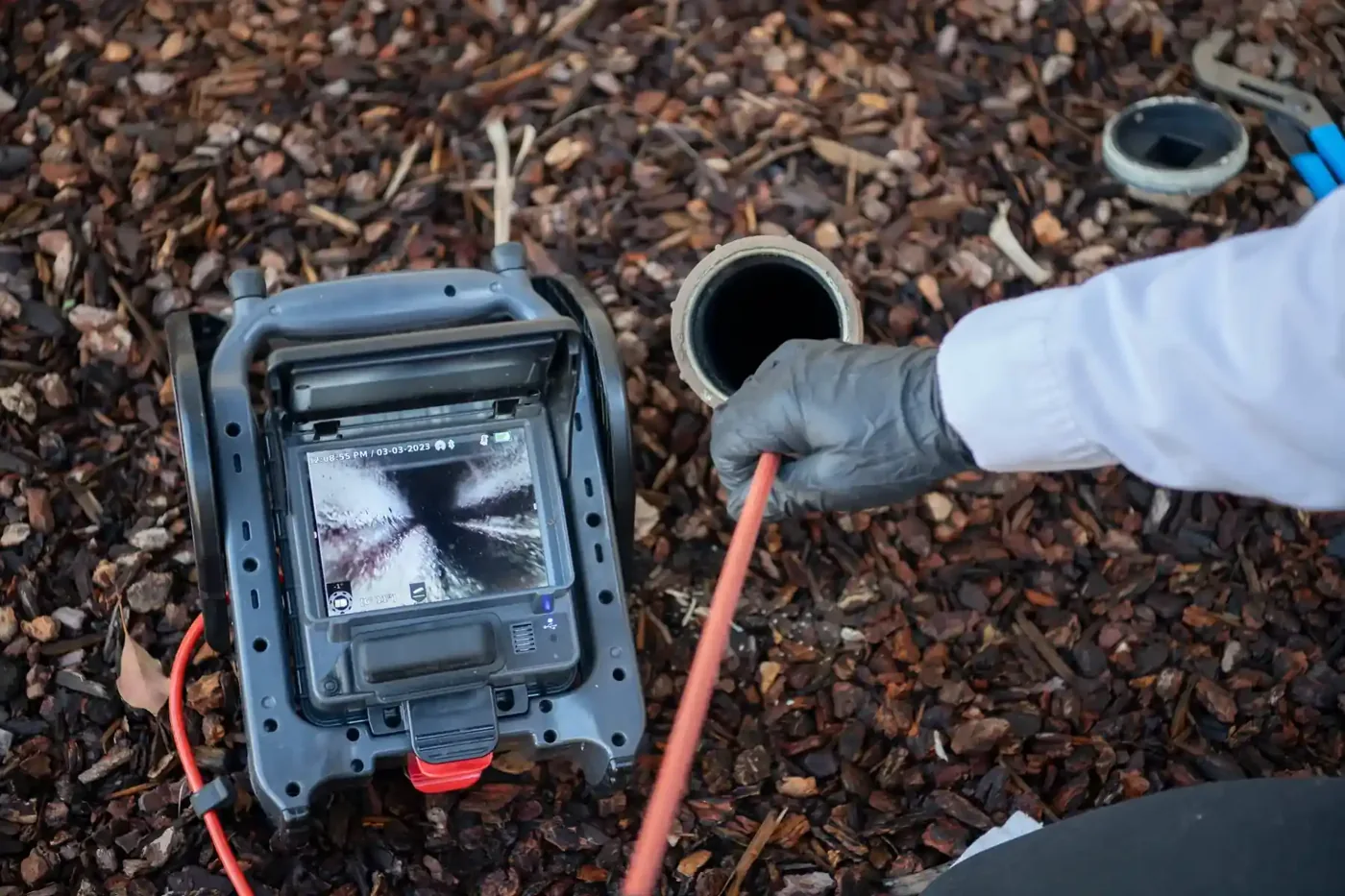
Visible cracks, displaced joints, deposits, obstruction points and pipe deformation can then be recorded. If the suspected section appears unobstructed, the findings may shift attention towards upstream branches or another cause.
The advantage is not simply inspecting fewer metres. It is commissioning work against a specific decision rather than collecting footage that may not answer the problem.
When does a wider network survey become worthwhile?
A broader commercial drain survey for a multi-building site becomes more useful when the uncertainty extends beyond an identifiable branch.
Examples include an estate with incomplete plans, several shared connections, longstanding maintenance problems across different areas or a need to document network condition before a property transaction or planned maintenance programme.
In these circumstances, investigating one symptom may leave important questions unresolved. A site-wide specification can identify which drainage runs need condition evidence, how those runs should be referenced and which outputs the commissioning organisation requires.
However, wider CCTV coverage should not be confused with complete knowledge of the system. Inaccessible sections and concealed connections may remain. An appropriate scope records those limitations rather than treating uninspected branches as satisfactory.
Why drainage type matters when comparing buildings
Commercial properties may have foul drainage, surface water drainage and, in some locations, combined systems. These serve different purposes and may lead to different destinations.
The Environment Agency’s pollution prevention guidance for businesses in England explains the importance of a drainage plan showing drain types, directions of flow and discharge destinations. It also identifies the need to check drainage for blockages, leaks and incorrect connections.
A problem affecting roof-water gullies should therefore not automatically be investigated as though it originated in a foul drainage branch. Similarly, an unobstructed surface-water pipe does not establish that the entire system has adequate capacity during intense rainfall.
Where a site discharges contaminated washwater, understanding the receiving system has an additional operational purpose. It is necessary to distinguish evidence of pipe condition from evidence about where the water goes.
What if the underground network is poorly documented?
When the relevant drainage connections cannot be established, choosing an inspection scope solely from surface symptoms can be inefficient.
Existing chamber positions, building drawings and maintenance records provide starting information. Where physical connections remain uncertain, drain mapping can help establish the routes and relationships between accessible underground sections.
Mapping and condition inspection answer different questions. Mapping addresses the position and connectivity of the network; CCTV condition inspection records visible features inside accessible pipework.
An accurate route plan does not establish that every pipe is sound, while a recording of a sound-looking pipe does not establish where its downstream branches discharge.
Combining these forms of evidence may be worthwhile before specifying extensive maintenance or repairs across an unfamiliar estate.
How should the survey be scoped for a useful decision?
A commissioning brief should identify the question that the eventual report must answer. For a mixed-use commercial site, the following details help determine whether targeted or broader coverage is appropriate:
- Affected assets: Name the buildings, gullies, chambers or facilities experiencing problems.
- Recorded symptoms: Identify blockages, surcharging, slow drainage or flooding, including their timing and frequency.
- Existing records: Supply available drainage drawings, inspection results and previous maintenance information.
- Required coverage: Specify known problem sections separately from runs included for wider condition assessment.
- Report purpose: Explain whether the findings will support repairs, maintenance planning, site acquisition or another defined decision.
- Unknown sections: Require the final record to identify access restrictions and any pipe runs that could not be examined.
Where a landlord, insurer or another recipient needs particular reporting information, the required format should be established before the inspection rather than reconstructed afterwards.
How should the findings influence the next step?
If a targeted inspection identifies a substantial restriction in the shared pipe serving the affected buildings, it may provide sufficient evidence to consider clearance or repair of that section. Expanding the survey would then be a separate decision based on wider concerns.
If the initial inspection finds no relevant restriction, or reveals several unknown connections, broader investigation may become justified. A site with recurring problems in unrelated sections may also benefit from a network-wide condition record rather than successive isolated inspections.
The strongest commissioning decision is based on the uncertainty being resolved. Inspect the suspected shared connection first when the evidence supports that approach. Commission wider coverage when the site’s drainage layout, condition or maintenance requirements cannot be understood adequately from a narrower investigation.