

CCTV drainage surveys
Severn Trent Build Over Agreement
If you plan to build over or near a Severn Trent public sewer, you may need Severn Trent approval before work starts. This guide explains when a formal build over agreement or self-certification may apply and where CCTV survey evidence is required.
What a Severn Trent build over agreement is
Severn Trent uses formal build over agreements for work over or near public sewers that does not qualify for its self-certification route. A formal agreement is written approval for the proposed work and can include conditions to protect the sewer and maintain access. It does not replace planning permission or building regulations approval.
If a Severn Trent public sewer crosses or runs close to the proposed works, check Severn Trent’s current build over or near sewer requirements before construction starts. Some lower-risk work can follow the self-certification route, while other work requires a formal application.
This is an independent guide. It is not affiliated with Severn Trent and does not replace their published requirements.
When consent is likely to be needed
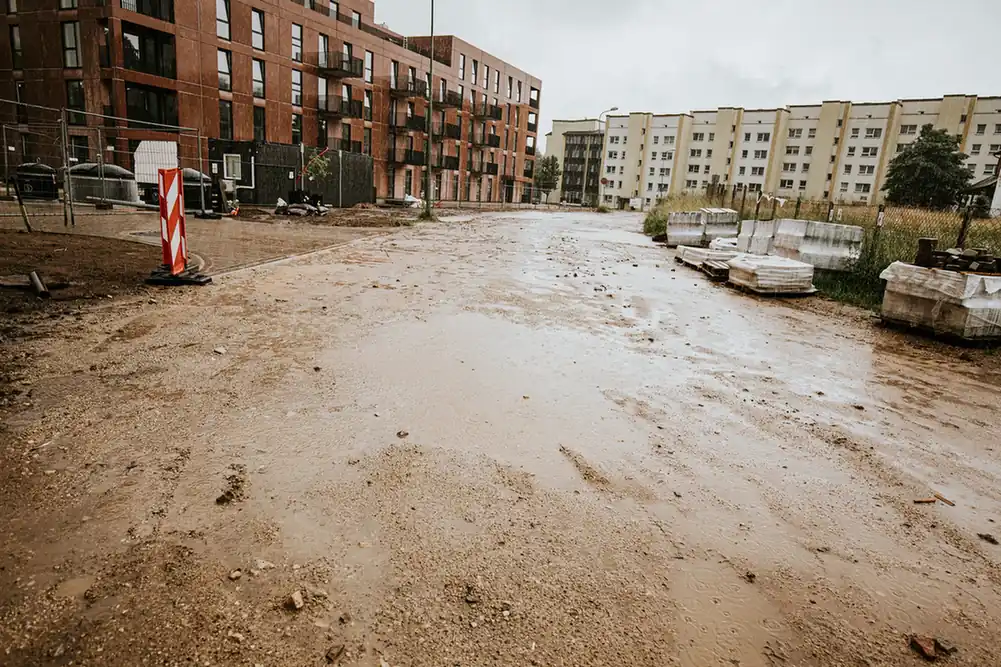
Severn Trent’s current guidance explains when a project can be self-certified and when a formal application is required. Check the Severn Trent build over or near sewer guidance for the current criteria. Relevant situations include:
- Building over a public sewer, whether it is a foul sewer, surface water sewer or combined sewer.
- Building close enough to a public sewer for the proposed foundations or structure to affect the protected area around it.
- Foundations, piling, retaining walls or heavy structures that could load or move a sewer.
- Extensions, garages and other building work where a public sewer falls within the area affected by the proposal.
The applicable route depends on factors including sewer size, position and the proposed work. Severn Trent states that a formal application is required where the sewer is larger than 150mm, where a manhole needs to be moved, altered or built over, or where the project does not meet the self-certification criteria. Check the current criteria before relying on a general distance rule.
Why the sewer records matter
Severn Trent’s sewer records can help identify mapped public sewers, but not all public pipes appear on those records. Shared drains and lateral drains may also be public following the 2011 transfer of private sewers in England and Wales. Confirm the status and location of the pipe rather than relying on the number of properties it serves.
Records do not show every public sewer and should not be relied on alone to establish the precise position of a pipe. A CCTV survey can record accessible internal pipe surfaces, visible junctions and changes in material or diameter. Establishing the route or depth may require tracing or other survey methods because a camera alone does not establish the pipe’s underground position.
We can help with build over CCTV surveys that record the accessible internal condition of the sewer for a build over application.
What a build over survey involves
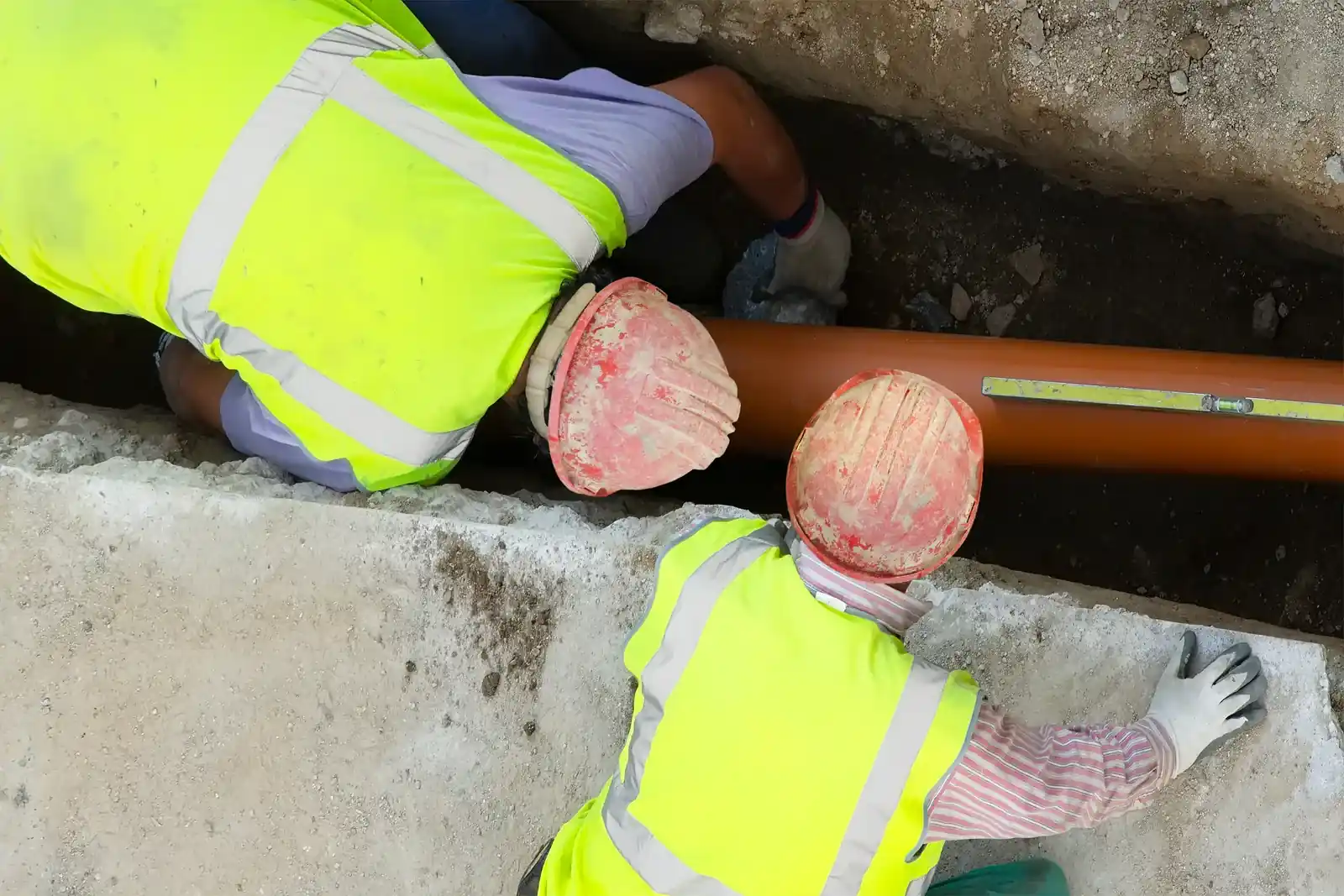
Where Severn Trent requires CCTV evidence, the survey records the accessible internal condition of the affected sewer. The application may also need drawings showing the sewer and proposed works. The survey can record:
- Pipe material and diameter where these can be established, together with survey location information.
- Condition, including cracks, deformation, joint displacement and root ingress.
- Location of junctions, connections and any manholes or inspection chambers.
- Visible defects that may need further assessment before the build proceeds.
The survey shows visible internal surfaces. It cannot detect every defect, and it cannot see through heavy deposits or standing water. Where a pipe is badly silted, a clean may be needed before a meaningful survey is possible. The report contents and coding depend on the agreed specification, so it is worth confirming what Severn Trent expects for your application before the survey is booked.
Condition, access and repair
If CCTV evidence identifies defects, Severn Trent may require further information or remedial work before final approval. The appropriate response depends on the defect, the sewer and Severn Trent’s requirements for the application.
Manholes and access points can affect which approval route applies. Severn Trent states that a formal application is required where a project needs to move, alter or build over a manhole, while its self-certification criteria include restrictions on internal manholes and clearance from public access points. Check the current criteria for the proposed layout before work starts.
How the application process works
Formal applications are made to Severn Trent’s building and developing team. For its current formal process, Severn Trent asks for the application, building plans and a CCTV survey where the affected pipe is not being replaced. The submission may include:
- Site location and proposed layout drawings.
- Sewer records and drawings or survey information showing the pipe in relation to the proposed work.
- Details of foundations and how they will avoid loading the sewer.
- CCTV survey information where required by Severn Trent, plus details of any proposed remedial work.
For a formal application, Severn Trent currently states that it reviews the submission before issuing provisional approval where acceptable. After the work, a CCTV report is required so Severn Trent can make its final decision. Check the current process directly before submitting because forms and requirements can change.
If you are also dealing with a Thames Water site, our Thames Water build over agreement guide covers the equivalent process in that region. The principles are similar, but the requirements and forms differ.
Surveys and evidence that support an application
Where CCTV is required, the report should meet Severn Trent’s current submission requirements and clearly identify the surveyed run and recorded condition. Where the drainage layout is uncertain, drain mapping may also help establish the route.
We can help with sewer CCTV surveys and drainage surveys that provide the evidence Severn Trent may ask for. We can also help with build over agreement checks that set out the questions to put to Severn Trent for your site.
Practical points before you start
Confirm whether the sewer is public or private and check Severn Trent’s current route for the proposed work. Sewer records can be incomplete, particularly for transferred sewers. Where a formal application is required, do not start the affected work until the necessary approval is in place. Keep the survey report, drawings and Severn Trent correspondence with the project records.
Our guides section covers related topics, including surveys for adoption and pre-purchase checks.
Free online tool
Build Over Agreement Checker
Check what to ask your sewerage company before building near a drain or sewer.
Common questions
Frequently asked questions
Do I always need a build over agreement from Severn Trent?
Not always. Severn Trent has both self-certification and formal application routes for work over or near its public sewers. The correct route depends on the sewer and the proposed work, so check Severn Trent's current criteria before starting.
What survey evidence does Severn Trent ask for?
For a formal application, Severn Trent currently asks for building plans and a CCTV survey where the affected pipe is not being replaced. After the work, it asks for a CCTV report before making its final decision. Check the current application guidance before specifying the survey.
Can a CCTV survey find every defect in the sewer?
No. A CCTV survey shows visible internal surfaces. It cannot detect every defect, and heavy deposits or standing water can hide the pipe wall. Where the sewer is badly silted, cleaning may be needed before a useful survey is possible.
What happens if the sewer is in poor condition?
Severn Trent may ask for further information or remedial work if the CCTV evidence identifies a problem. The required action depends on the defect, the sewer and the conditions of the approval.
Request a quote
Complete the form and we will get back to you.