
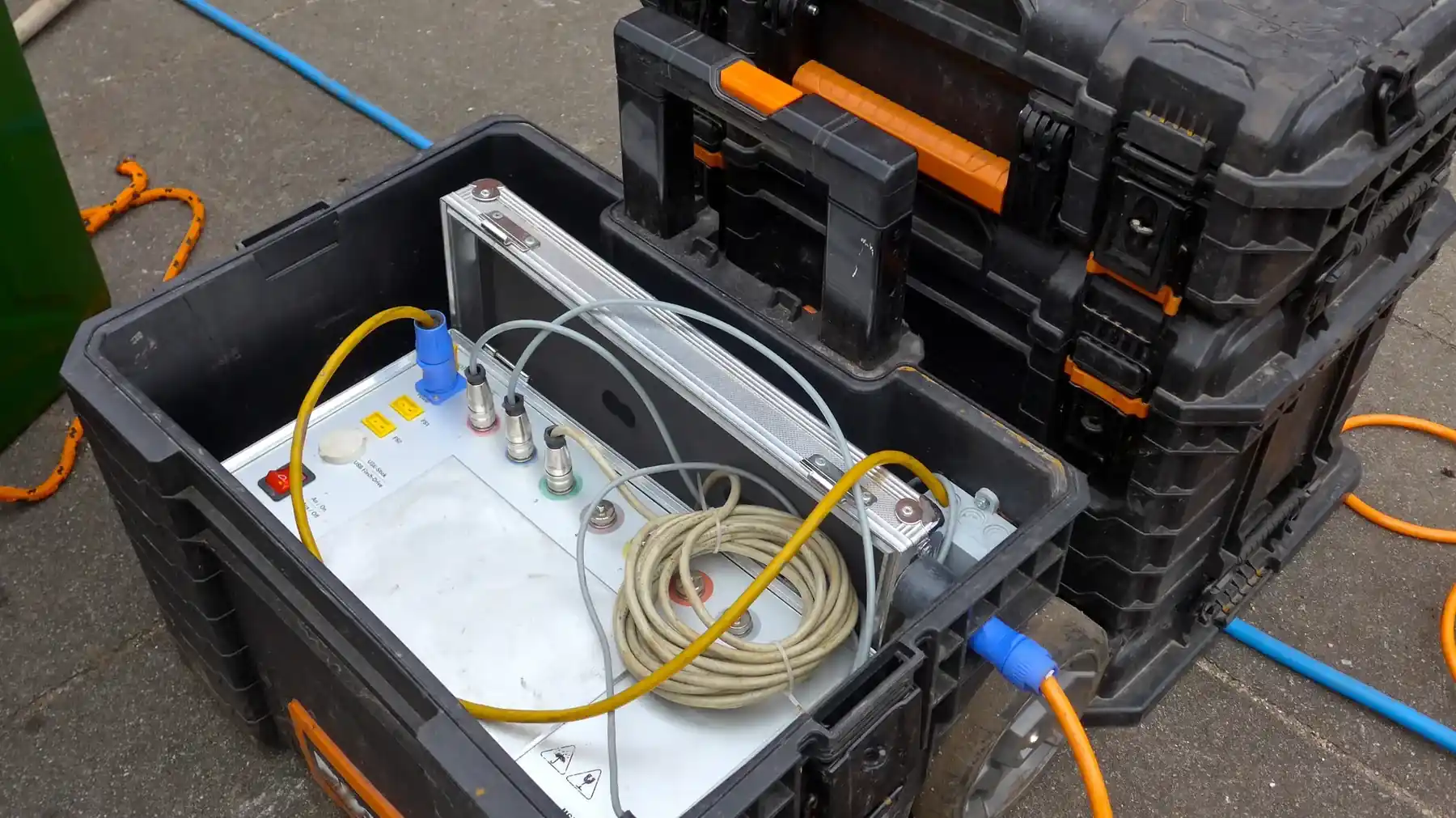
CCTV drainage surveys
How Does a CCTV Drain Survey Work?
A CCTV drain survey puts a camera inside a pipe to record what the internal surfaces look like. The work is planned around access, flow and the question you need answered, whether that is a home purchase, a build over project or a recurring blockage.
What a CCTV drain survey is
A CCTV drain survey is an internal inspection of a drain or sewer using a camera mounted on a push rod or crawler. The camera travels along the pipe and sends a live image to a screen while recording the run. An operator notes defects, changes in pipe material, connections and the position of each observation.
The purpose is to see the condition of surfaces that are normally hidden. A drain can pass water without obvious signs above ground while the pipe below has a crack, a displaced joint or a build up of roots. A survey gives a record of what was visible at the time of inspection.
We arrange CCTV drain surveys for houses, commercial premises and development sites. The equipment and survey method need to suit the drainage, available access and purpose of the inspection.
Access, cleaning and preparation
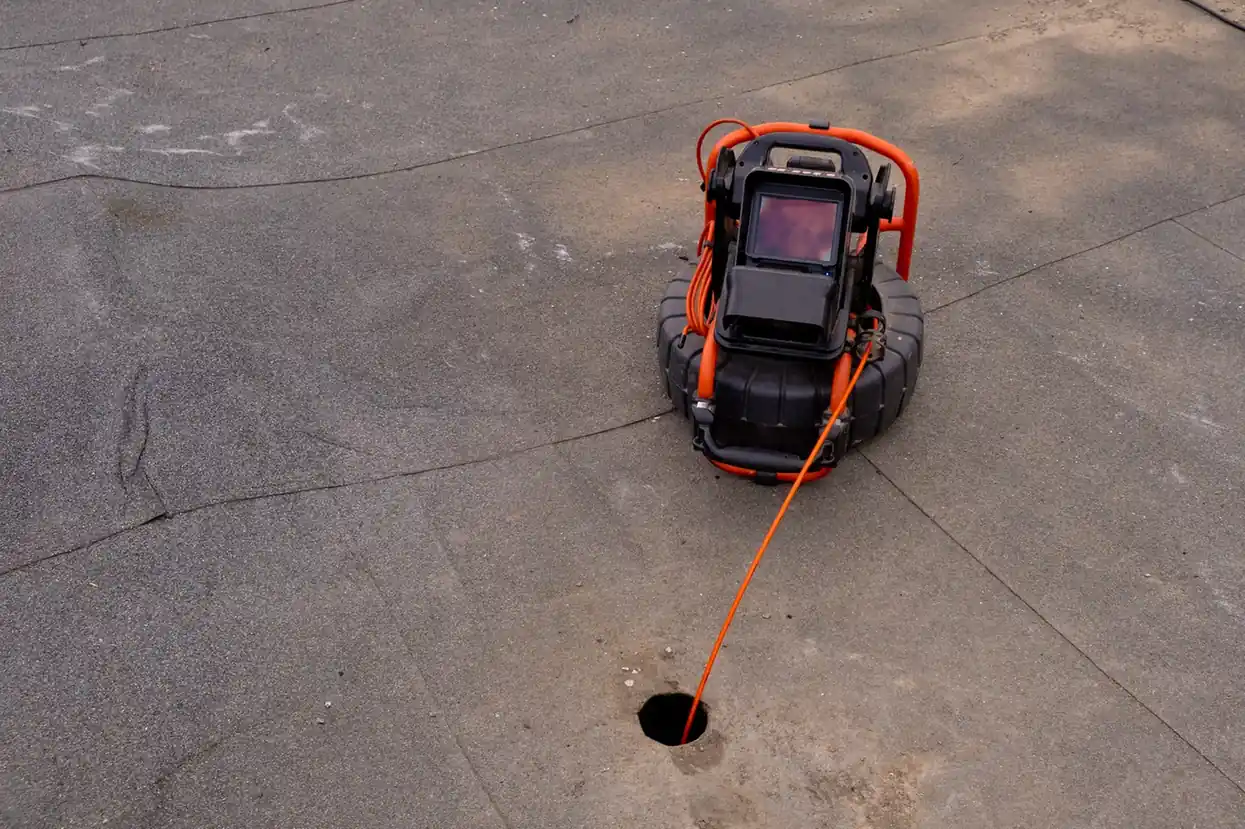
Before a camera goes into a pipe, the survey needs a way in and a reasonably clear view. Access may be through an existing manhole, a rodding eye, an inspection chamber or a lifted fitting. If none of these exist, access arrangements need to be discussed before the visit.
Cleaning may be needed where silt, grease, scale, roots or other deposits prevent a useful view of the pipe. Whether cleaning is required, and to what extent, depends on the condition of the drainage and the purpose of the survey. This should be agreed as part of the scope.
Water flow also matters. A pipe running full gives the camera little or no view above the waterline. In some cases the flow can be reduced or diverted. In others, the survey is limited to what can be seen and the report should say so.
The camera run, recording and locating
The camera is inserted at the access point and pushed or driven along the pipe. The operator controls the speed and watches for changes in the image. A sonde or locator may be used to trace the camera’s position above ground, which helps to tie observations to a specific point on the drainage run.
The operator records the survey in accordance with the agreed specification and logs relevant observations along the run. Depending on the survey, this can include distances, pipe dimensions, material, connections and the position of visible defects.
Where a pipe changes direction, the camera may not pass a tight bend. A survey can stop at a bend, a collapse or a heavy obstruction. The report should state where the inspection ended and why.
What the camera can and cannot show
A camera shows visible internal surfaces. It can reveal cracks, fractures, displaced joints, open joints, root ingress, scale, grease, debris, deformation and some connection defects. It can also show the general condition of the pipe wall where the view is clear.
It cannot see through deposits, standing water or a full pipe. It cannot confirm the external condition of a pipe, the soil around it or the structural state of a buried chamber. A camera does not detect every defect. Some defects sit behind a lining, under silt or outside the field of view.
For these reasons, a CCTV survey is one piece of evidence. It is not a guarantee that a drain is free from defects. Where the camera view is limited, the report should say what was not seen.
Coding and reporting
Where coded reporting is required, observations can be recorded using a recognised system such as MSCC5. Not every CCTV inspection needs coded or graded reporting, so the required reporting standard should be agreed before the survey.
Report contents depend on the agreed specification. They may include footage or images, a survey log, distances, observations and a plan or sketch where required. A homebuyer survey, a Section 104 adoption survey and an inspection for repair planning may require different outputs.
We can help with CCTV drain survey reports where the scope and coding requirements are clear from the outset. If you need a survey for a specific purpose, say so before the visit so the specification can match.
How long a CCTV drain survey takes
Time on site depends on the number and length of runs, access, flow conditions, cleaning requirements and the level of tracing or locating required. Obstructions or inaccessible sections can also affect whether the inspection can be completed in one visit. There is no standard duration that applies to every survey.
For a more detailed look at what affects cost and time, see CCTV drain survey cost.
When another method is needed
CCTV is not always enough on its own. Dye testing can help trace drainage connections, while drain mapping can be used where the route or layout needs to be established. The additional method should be chosen according to the question the investigation needs to answer.
If you are buying a property, a homebuyer drain survey may include CCTV alongside other agreed checks. Where work is proposed near or over a sewer, the relevant sewerage body may require CCTV evidence to a particular specification.
For these projects, a build over CCTV survey may form part of the required evidence. A build over checker can help you prepare questions, but it does not determine whether consent or an agreement is required and does not grant permission.
Safety and competence
Some drainage work can involve confined spaces. Where the Confined Spaces Regulations 1997 apply, entry should be avoided where possible. If entry is unavoidable, a safe system of work and adequate emergency arrangements are required. CCTV inspection can often be carried out from outside the drain or sewer. Where entry is necessary, the risks and required controls must be assessed before work starts.
We arrange CCTV drain surveys and can help you specify the survey around the problem or reporting requirement. For guidance on access, see drain survey access requirements.
Free online tool
Build Over Agreement Checker
Check what to ask your sewerage company before building near a drain or sewer.
Common questions
Frequently asked questions
How long does a CCTV drain survey take?
There is no fixed duration. It depends on the number of runs, pipe length, access, cleaning and flow. A small domestic system may be quick. A larger site with long runs or heavy deposits will take longer. Cleaning and tracing can add time, and a blocked pipe may need a return visit.
What is a CCTV drain survey?
It is an internal inspection of a drain or sewer using a camera, commonly on a push rod or crawler. The operator records the accessible run and notes relevant observations. The reporting format depends on the specification agreed for the survey.
Do I need a CCTV drain survey?
It is useful when you need to know the condition of a hidden drain. Common reasons include a home purchase, repeated blockages, a build over project, adoption of a new drainage system or a repair specification. If the layout is unclear, a dye test or mapping may be needed first.
What does a drain survey involve?
A suitable access point is identified, cleaning is carried out if required, and the camera is passed through the accessible pipework. The operator records the inspection and reports the relevant findings. Coding, locating and mapping are included where the agreed specification requires them.
Can a CCTV survey find every drain defect?
No. A camera shows visible internal surfaces. It cannot see through deposits, standing water or a full pipe, and it does not confirm the external condition of the pipe or surrounding ground. The report should state where the view was limited.
Request a quote
Complete the form and we will get back to you.