

CCTV drainage surveys
Commercial Drain Survey
Commercial drainage carries more flow, more connections and less tolerance for disruption than a single house. A survey needs to answer the question that prompted it, whether that is a repeated blockage, a flooding incident or a lease obligation.
What a commercial drain survey covers
A commercial drain survey is a planned inspection of below ground drainage serving a building or site. The scope usually follows the pipe runs that matter to the question in hand: the line that keeps blocking, the area that flooded, the drainage serving a unit being handed back, or the network across a retail park or distribution centre.
The survey records what is visible inside the pipe. That includes joint condition, cracks, displaced sections, root ingress, scale, silt levels, obstructions and connections. It also records the route and depth of runs where these can be established, which is often as valuable as the defect list on a site with poor record drawings.
We can help with commercial CCTV drain surveys where the output needs to support a maintenance decision, a dilapidations discussion, an insurance claim or an acquisition. The report format can be agreed before the work starts.
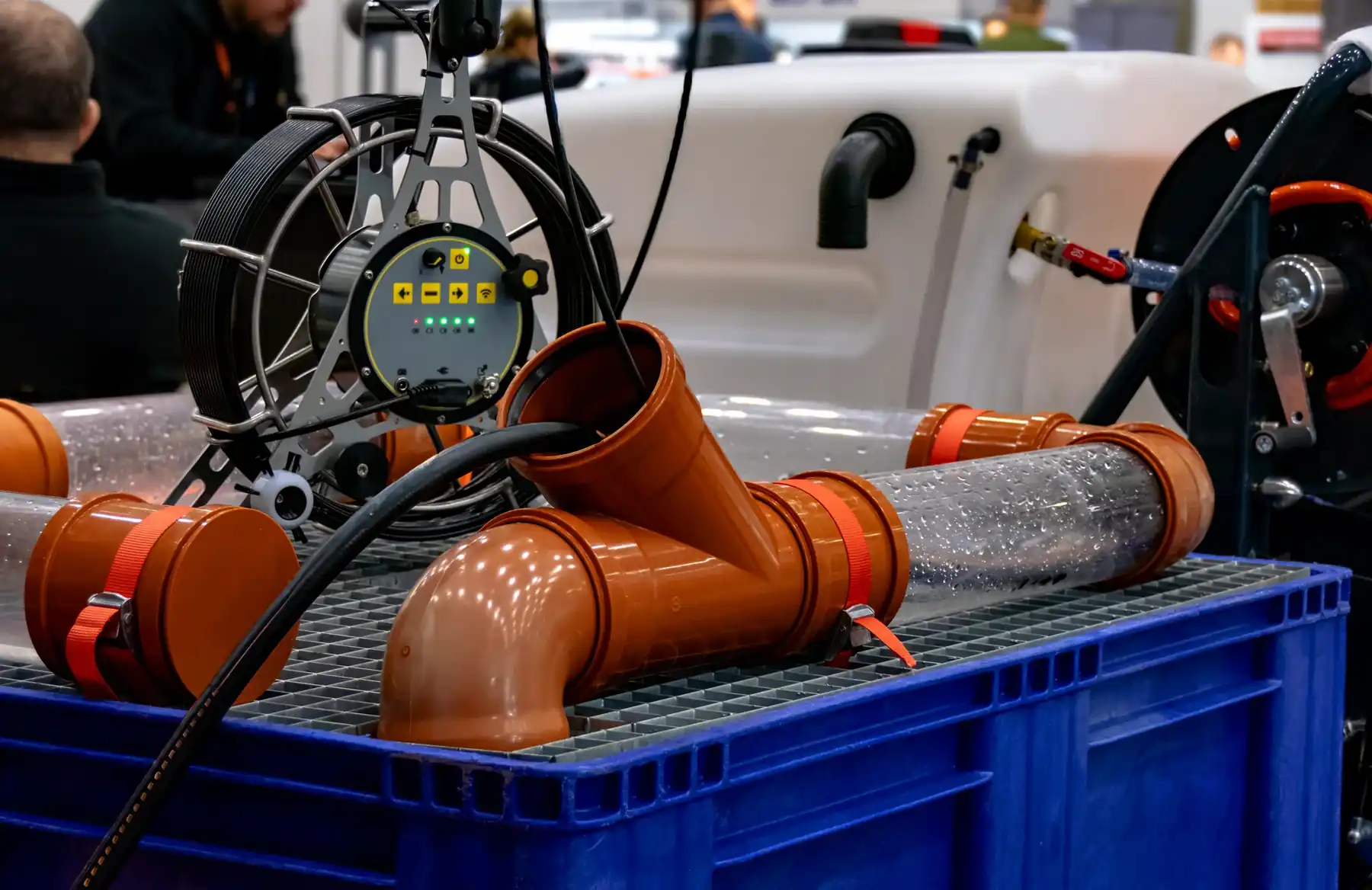
Why commercial sites need a different approach
Commercial sites can have long drainage runs, shared connections, separate foul and surface water systems, pump chambers, gullies and other drainage assets. The survey scope needs to reflect the parts of the system relevant to the problem being investigated.
Survey timing may also need to work around production, trading hours, vehicle movements or periods of high flow. Access can be restricted by parked vehicles, loading activity or locked chambers.
Because of this, the useful starting point is a clear brief. Which pipes, which problem, and what decision the survey needs to support.
Triggers for commissioning a survey
Common reasons commercial clients ask for a drain survey include:
- Repeated blockages on the same run, where clearing the pipe has not stopped the problem returning
- Flooding inside a unit, yard or car park, where the cause is not obvious from the surface
- Persistent odours that may point to a broken pipe, a lost connection or a defective trap
- Lease end dilapidations, where the condition of drainage needs to be evidenced
- Acquisitions and pre-purchase checks on a site with limited drainage records
- Insurance claims following a collapse, subsidence or escape of water
- Planned maintenance or relining programmes, where the pipe condition needs to be known before work is specified
Each of these shapes the survey differently. A dilapidations survey may need to record condition along the whole demise boundary. A blockage investigation may focus on one run but need dye testing to confirm connections. A relining programme needs a survey that a lining contractor can price from.
Access, permits and out of hours working
Commercial surveys often need to be planned around the site rather than the other way round. Chambers may sit under loading bays, in service yards or behind security gates. Some sites need permits to work, inductions, or a nominated escort. Where a site operates around the clock, survey work may need to be done out of hours to avoid disrupting trading or production.
Access requirements are worth confirming early. A chamber that cannot be lifted, or a run that cannot be reached without isolating flow, will change what can be surveyed and what the report can say. Where access is limited, the report should state the limitation rather than imply the whole network was seen.
Confined space entry is a separate matter. Under the Confined Spaces Regulations 1997, entry should be avoided where the work can reasonably be carried out from outside. Where entry is necessary, the work requires appropriate safe working and emergency arrangements. See the HSE guidance on confined spaces legislation.
What the survey can and cannot show
A CCTV survey shows the visible internal surface of the pipe along the route the camera can travel. It can identify cracks, fractures, displaced joints, deformation, roots, encrustation, silt and objects. It can show where a connection enters, and in many cases which direction it comes from.
It cannot see through heavy silt, scale or standing water. It cannot detect every defect, particularly those outside the pipe wall or behind a lining. A pipe that appears sound on camera may still have a defect that only shows under pressure testing or excavation. Where the camera cannot pass, the report should say so.
Defect coding depends on the specification agreed. Some surveys are coded to a recognised system such as MSCC5, and some are not. Not every survey is graded, and the report contents depend on what was asked for. If a particular coding or format is needed for a CAFM system or a contract, that should be confirmed before the survey is specified.
Reporting for facilities and estates teams
For multi-site estates, the report is often as important as the survey. A useful commercial report typically includes:
- A plan or schematic showing surveyed runs and the direction of flow
- Camera footage referenced to chainage or manhole-to-manhole sections
- A defect schedule with location, description and severity where coding applies
- Photographs of significant defects
- Notes on access limitations and any runs not surveyed
- A summary that links defects to the original question, such as the cause of a blockage
If the report needs to support a CAFM or asset management system, specify the required fields and format when requesting a quote. Whether that format can be provided should be confirmed before the survey is booked.
For sites with poor records, a survey is often paired with drain mapping so the pipe routes and connections are captured alongside condition. Where the question is about which pipe serves which building, drain dye testing can confirm connections that CCTV alone cannot.
From survey to planned work
A survey is usually the start of a decision, not the end of one. The findings may point to cleaning, root cutting, patch repair, relining or replacement. On larger sites, the survey often feeds a planned maintenance programme rather than a single repair.
Where relining is being considered, the survey needs to be detailed enough for a lining contractor to price and specify the work. See drain survey before relining for what that involves. Where the site has recurring problems across several buildings, a sector view may help, such as drain surveys for facilities management or drain surveys for industrial sites.
Where building regulations, public sewers or adoption requirements are relevant, the requirements for the site should be checked before work is specified. In England, see Approved Document H for statutory guidance on drainage and waste disposal.
What affects the cost of a commercial survey
Commercial survey pricing depends on the site, not a standard rate. The main drivers are the number and length of runs, the number of chambers, the access arrangements, whether out of hours working or permits are needed, the level of cleaning required before the camera can see, and the report format.
A short survey on one blocked run is a different job from a full network survey across a distribution centre. Prices require a real quote based on the actual scope, so the useful step is to describe the site and the question rather than ask for a headline figure.
Free online tool
Build Over Agreement Checker
Check what to ask your sewerage company before building near a drain or sewer.
Common questions
Frequently asked questions
Can a commercial drain survey be done outside trading hours?
Often yes, where the site needs it. Out of hours working can reduce disruption to trading, production or loading activity, but it depends on access, lighting, permits and the site's own rules. This is best confirmed when the survey is scoped.
Will the survey find the cause of a repeated blockage?
It usually identifies what is visible in the pipe, such as roots, displaced joints, scale or a partial obstruction. It cannot see through heavy silt or standing water, so where the pipe is heavily silted, cleaning before the survey may be needed to get a clear view.
Can the report be formatted for our CAFM system?
If you need a particular format or specific CAFM fields, include those requirements when requesting a quote. The supplier can then confirm what report format and defect coding can be provided before the survey is booked.
Do we need a survey before relining a commercial drain?
A relining contractor needs to know the pipe condition, diameter, route and any defects before pricing and specifying the work. A survey that is detailed enough for that purpose is normally expected, and the scope should be set with relining in mind.
Does a drain survey prove the drainage is legally compliant?
No. A survey records what is visible inside the pipe at the time of inspection. It does not by itself prove that the drainage system or site is legally compliant, and other checks may be needed.
Request a quote
Complete the form and we will get back to you.