
CCTV drainage surveys
Drain Surveys for Facilities Management
Facilities management teams often inherit sites with incomplete drainage records and no recent condition information. We can help with drain surveys, condition records and drainage asset information across individual properties and wider portfolios.
Why drainage condition data matters in facilities management
Drainage records on managed sites are often incomplete. A maintenance record may show that a line was cleared or jetted without recording its condition, layout or the reason a problem keeps returning. CCTV survey data can provide a clearer record for future maintenance and investigation.
A condition baseline records what is visible inside accessible runs at a known date. Where later surveys use the same references and reporting method, facilities teams can compare findings and use the record when planning maintenance, investigation or repair.
We can help with drain surveys for facilities management where the aim is a usable record, not a one-off inspection. That usually means agreeing the scope first: which buildings, which manholes, which connections, and what level of detail the report needs.

Building an asset register from survey data
A drainage asset register can record runs, chambers and connections with enough detail to identify them on site and in a report. Survey information can add pipe material and diameter where identifiable, run references, direction of survey and observed condition. Other site measurements or mapping may be needed for information such as depth and wider layout.
Two practical points matter here. First, chamber and run references need to be consistent between the survey, site drawings and future works. If a chamber is called MH4 on one document and S4 on another, the register becomes harder to use. Second, not every run will be accessible. Chambers may be buried, obstructed or located beneath permanent structures, and some runs may not have a suitable access point. The register should state what was surveyed and what was not.
Where records are poor, drain mapping can establish the layout before condition survey work begins. On larger or mixed-use sites, a commercial drain survey can be scoped around the operational areas that matter most.
Planning surveys across a portfolio
For portfolio work, the scope needs to reflect the condition history, use and access arrangements at each site rather than applying the same inspection to every property.
- Priority sites: those with recurring blockages, known defects or upcoming lease events.
- Baseline sites: no known problems, but no condition record either.
- Monitoring sites: previously surveyed, due for re-inspection at an agreed interval.
For multi-site work, locations can be grouped where practical, but the scope should still reflect the drainage issues, access and operating constraints at each site.
There is no single inspection interval for every site. The case for repeat surveying should take account of previous findings, recurring problems, planned works and the consequence of a drainage failure in that part of the site.
Out of hours access and operational constraints
Many facilities cannot be surveyed during trading or production hours. Chambers may be in loading bays, service yards, car parks or plant rooms where daytime access would disrupt operations or create safety conflicts.
If the survey needs to take place outside normal working hours, include that requirement when the work is scoped. Induction, permits, lighting, escorts and other site controls should also be confirmed in advance. CCTV inspection is normally carried out from the surface. Where confined-space entry is required, the Confined Spaces Regulations 1997 apply.
Any traffic management, restricted access or operational requirements should be identified when the survey is scoped so the visit can be planned around the site’s working arrangements.
What a survey can and cannot show
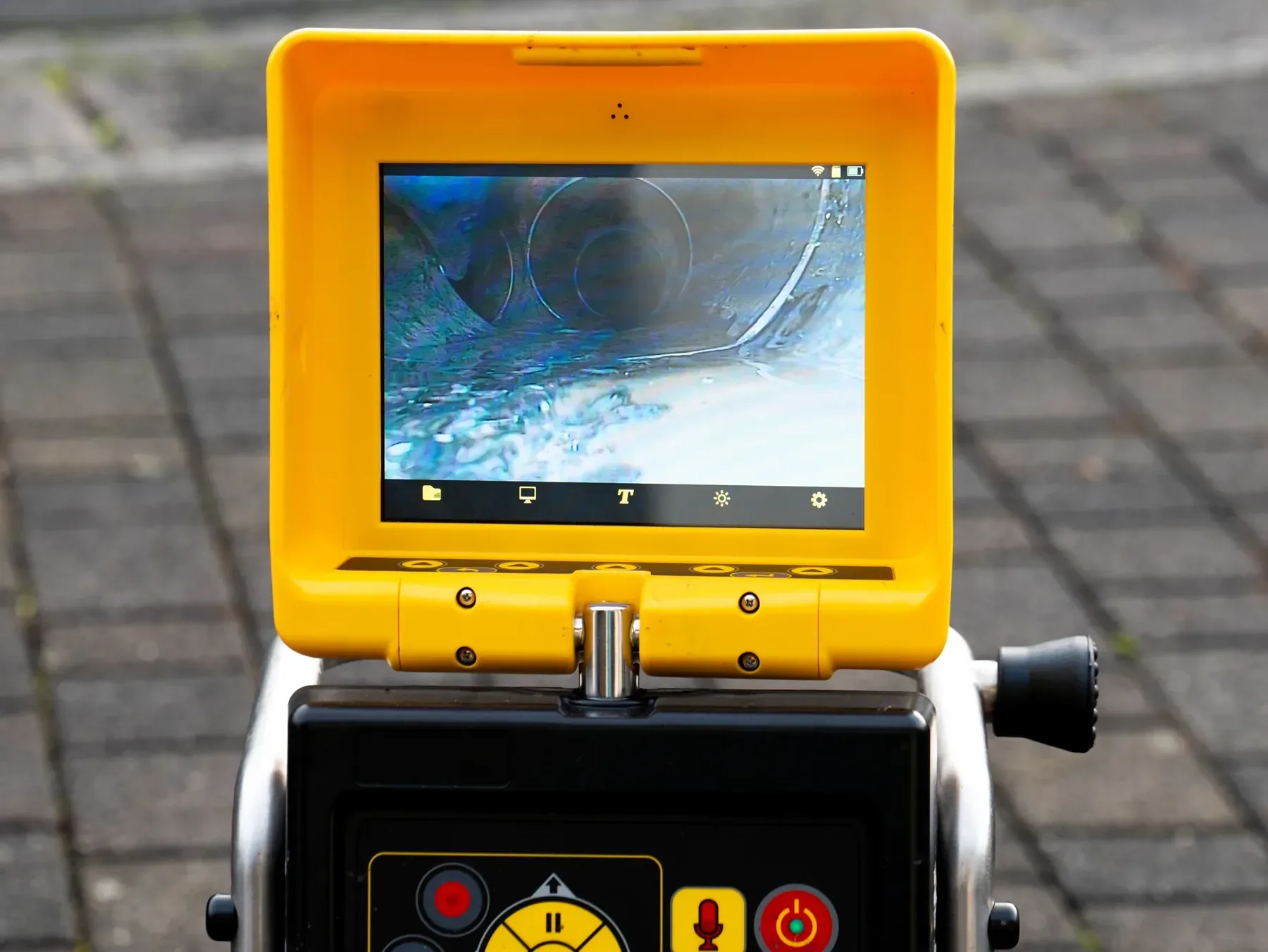
CCTV survey shows the visible internal surface of the pipe. It can identify cracks, fractures, deformation, displaced joints, root ingress, scale, debris and some connection defects. It cannot see through deposits, and it cannot detect every defect. A pipe that appears sound on camera may still have a defect outside the visible surface or behind a lining.
Report contents and coding depend on the agreed specification. Some surveys use a recognised condition coding system and others provide a visual condition record. Where consistent coding is needed for comparison across a portfolio or over time, that should be specified before the survey is booked.
If the survey is being used for an adoption, build over application or connection agreement, confirm the required survey and report format with the relevant sewerage company before the work is commissioned.
Connecting survey findings to planned maintenance
Survey findings can help plan maintenance and further investigation. Root ingress at a joint may lead to cleaning, monitoring or repair, while a displaced or damaged joint may need further assessment before a repair method is chosen.
Survey findings can support changes to cleaning or maintenance schedules. They may also show deposits, silt or recurring obstructions that need to be considered alongside the site’s maintenance history.
Where a defect is found, the next step is usually a decision about repair, renewal or monitoring. That decision depends on the defect, the pipe’s role, the cost of failure and the access available. A survey report can inform that decision, but it does not make it.
Scope, reporting and handover
A useful survey specification states the manholes to be accessed, the runs to be surveyed, the direction of survey, the coding system if any, and the report format. It should also state what happens if a run cannot be surveyed, for example because of a blockage or a buried chamber.
Report contents should be agreed before the survey. Depending on the scope, this can include plans, run references, observations, still images, video and condition coding. A portfolio baseline needs consistent references, while an investigation into a single problem may need a more focused report.
If future comparison is important, ask for the survey data and run references to be retained with the report. Keeping the same chamber and run references makes later surveys easier to compare.
We can help with planned survey programmes, condition baselines and asset register data for facilities management teams. To discuss a site or portfolio, request a quote or contact us with the site details and the decisions the survey needs to support.
Free online tool
Build Over Agreement Checker
Check what to ask your sewerage company before building near a drain or sewer.
Common questions
Frequently asked questions
Can drain surveys be carried out outside normal working hours?
If out of hours work is required, include this when requesting the survey so scheduling and site access can be considered. Induction, lighting, permits, escorts and any traffic management should be agreed before the visit.
How often should drainage be surveyed across a portfolio?
There is no single interval that suits every site. Repeat surveying should be based on previous findings, recurring drainage problems, planned works and the consequence of failure in that part of the property.
Does a CCTV survey cover every pipe on a site?
No. Survey coverage depends on access. Buried chambers, runs under structures and some private connections may not be reachable. A useful report states what was surveyed and what was not, so the asset register does not imply full coverage where none exists.
Can survey data be used to plan maintenance budgets?
Survey data can support maintenance budgeting by recording visible condition, recurring problems and areas that may need cleaning, further investigation or repair. Consistent coding can also help where condition needs to be compared across a portfolio. The survey does not by itself determine the repair method or budget priority.
Request a quote
Complete the form and we will get back to you.