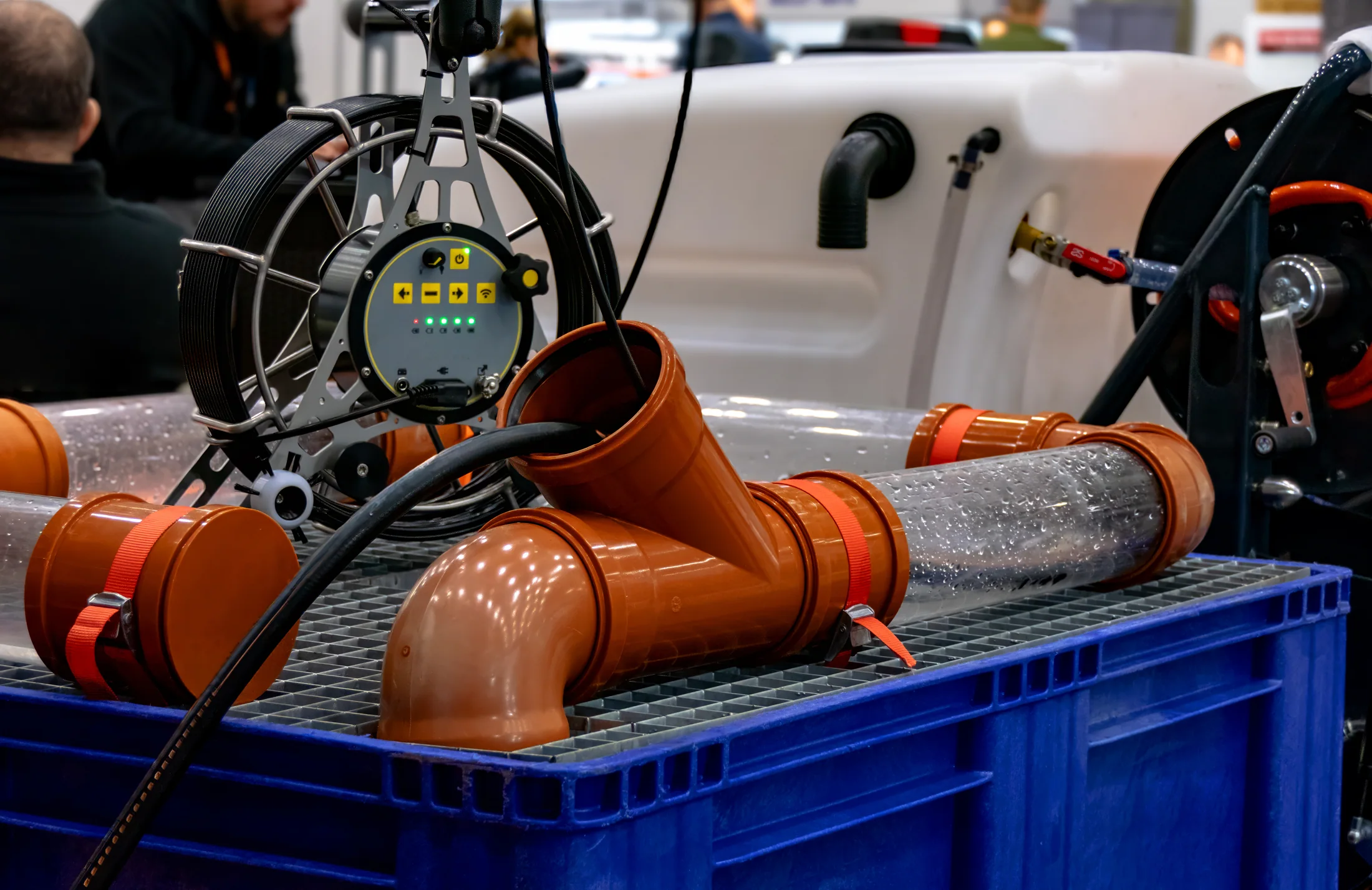
When a blocked drain crosses a property boundary, responsibility depends on the type and status of the pipe, not simply where the blockage is located. In England and Wales, a homeowner will generally arrange investigation of a private drain serving only their property, while the sewerage company is responsible for public sewers and qualifying lateral drains. Establishing which section is affected is therefore the first practical question.
Private drains, lateral drains and public sewers
A private drain normally carries wastewater from one property towards the point where it joins a sewer or another drainage connection. Its owner is generally responsible for maintenance and repairs.
A lateral drain is the section carrying wastewater from an individual property outside that property’s boundary before it reaches a sewer. Many lateral drains are now the responsibility of the sewerage company, following changes to the ownership of previously private drainage infrastructure.
A sewer generally carries wastewater from more than one property. A public sewer is maintained by the sewerage company. However, a shared pipe is not automatically a public sewer: its classification depends on the drainage arrangement and whether it has transferred to, or been adopted by, the sewerage company.
The government’s guidance on the 2011 private sewer transfer explains the transfer framework in England and Wales. It is particularly relevant to older shared connections. More recent installations may have different adoption arrangements, so the age and ownership history of the pipe can matter.
Why property boundaries can be misleading
Imagine two adjoining houses connected to a shared sewer beneath one garden. A blockage may appear close to the fence, but that position does not establish who maintains the affected length.
Three details need separating:
- Pipe route: Where does the connection run, and which properties discharge into it?
- Pipe classification: Is the affected section a private drain, lateral drain or public sewer?
- Defect location: Is the restriction within an individual connection or after several connections have joined?
A blockage affecting two households may suggest a shared downstream problem, but both properties could also have separate faults. Conversely, a public sewer restriction may initially be noticed by only one household.
Buckinghamshire Council’s drainage responsibility guidance distinguishes homeowner-maintained drains from sewerage company assets. Its diagrams are useful for understanding why the boundary must be considered alongside the pipe’s function.
When physical tracing is useful
Where ownership is uncertain, the drainage layout needs to be established before a location-based assumption is made. Existing drawings or sewer maps may indicate the likely route of a public sewer, but they may not show every private connection or establish precisely where a blockage sits.
Opening accessible inspection points can help identify the direction of flow and incoming branches. A sewer CCTV survey can then record visible junctions, restrictions and defects along the inspected section. Where a suitable locating method is available, the position of a feature may also be traced above ground.
This is particularly useful where a pipe passes beneath a neighbour’s garden, a shared driveway or an extension. The investigation can distinguish the observed defect from assumptions based on the visible position of a chamber cover.
What should happen before repairs are arranged?
First, establish which properties are affected and whether the blockage appears to be within an individual connection or a shared run. Then identify the likely asset owner using available records and evidence from the drainage layout.
If the affected section is public, its status and location can be referred to the sewerage company. If it is private, the appropriate property owner can consider further investigation or repair arrangements.
Where the camera cannot reach the suspected restriction, the uninspected section should remain clearly identified rather than being treated as confirmed.
The useful outcome is a documented understanding of the pipe route, the visible problem and the limits of the inspection. That gives everyone involved a firmer basis for deciding who should investigate further, without assuming that crossing a boundary transfers responsibility.