

CCTV drainage surveys
CCTV Drain Survey London
CCTV drain surveys in London for house purchases, extensions near public sewers and drains that keep blocking. Camera inspections help establish pipe condition, connections and drainage routes where access allows.
Request a quote
Complete the form and we will get back to you.
CCTV drain surveys for London properties
If your drains keep blocking, you are buying a house or flat, or you are planning an extension close to a sewer, a CCTV drain survey helps establish what is going on inside the pipes without digging. A camera is passed through accessible drainage, usually from inspection chambers, to examine the condition of the pipes and identify possible defects. The findings can also help establish where individual drains connect to shared pipework.
London has many Victorian and Edwardian terraces where drainage arrangements may have changed as properties were extended or converted into flats. Inspection chambers can be in rear gardens, shared passages or beneath paving. For a buyer or property owner, the important questions are often where the drain runs, what condition it is in and whether it serves another property.
- Thames Water sewers: Thames Water provides sewerage across its London service area, including places served by other drinking water suppliers.
- Build-over evidence: A CCTV inspection can record the accessible sewer's condition before extension work and help establish its route.
- Shared terrace drains: Identifying where a private drain joins shared pipework helps investigate responsibility for defects.
Thames Water and the public sewers
Thames Water is the main sewerage undertaker for London, including areas where another company supplies drinking water. For properties within its sewerage area, Thames Water is the relevant company for enquiries about public sewer records and building near its sewers.
Many private sewers and lateral drains connecting to public sewerage systems transferred to sewerage undertakers on 1 October 2011 under the 2011 private sewer transfer regulations. Responsibility for an individual drain depends on its location, connections and ownership status.
In a typical terrace, the section serving only one house within its boundary is generally the property owner’s responsibility, while a shared sewer may fall to Thames Water. A CCTV survey can help identify the connection between a private drain and a shared run. The findings can then be considered alongside the sewerage company’s records when determining responsibility. The Water Industry Act 1991, section 199 covers the records sewerage undertakers keep of public sewers and relevant drains.
Extensions and build-over agreements
Rear and side extensions on London terraces can affect existing drainage, particularly where a sewer passes beneath a garden or close to the proposed foundations. Approved Document H, including the H4 guidance, addresses building over or within 3 metres of the centreline of a drain or sewer shown on the sewerage undertaker’s records. The guidance includes consulting the sewer owner before work starts.
Where a build-over application is required, a CCTV inspection can provide evidence of the sewer’s condition before construction. It can also help identify visible connections and investigate the pipe route, subject to available access and survey conditions. Our guide to the Thames Water build-over agreement explains the process, and our build-over CCTV survey page covers the purpose of the inspection and the information it can provide.
Homebuyer surveys on older London houses
A building survey looks at the structure, not the inside of the drains. On a Victorian or Edwardian house, a homebuyer drain survey before exchange can identify visible problems such as cracked or displaced clay pipe joints, roots entering the drainage and sections affected by movement or settlement.
Older properties may have alterations to their original drainage, including connections added when a kitchen or bathroom was moved. In a house converted into flats, a shared drain may serve several properties. A CCTV inspection helps show which accessible sections were examined and whether any defects or restrictions were found. The extent of the inspection matters when interpreting the findings.
What a CCTV drain inspection involves
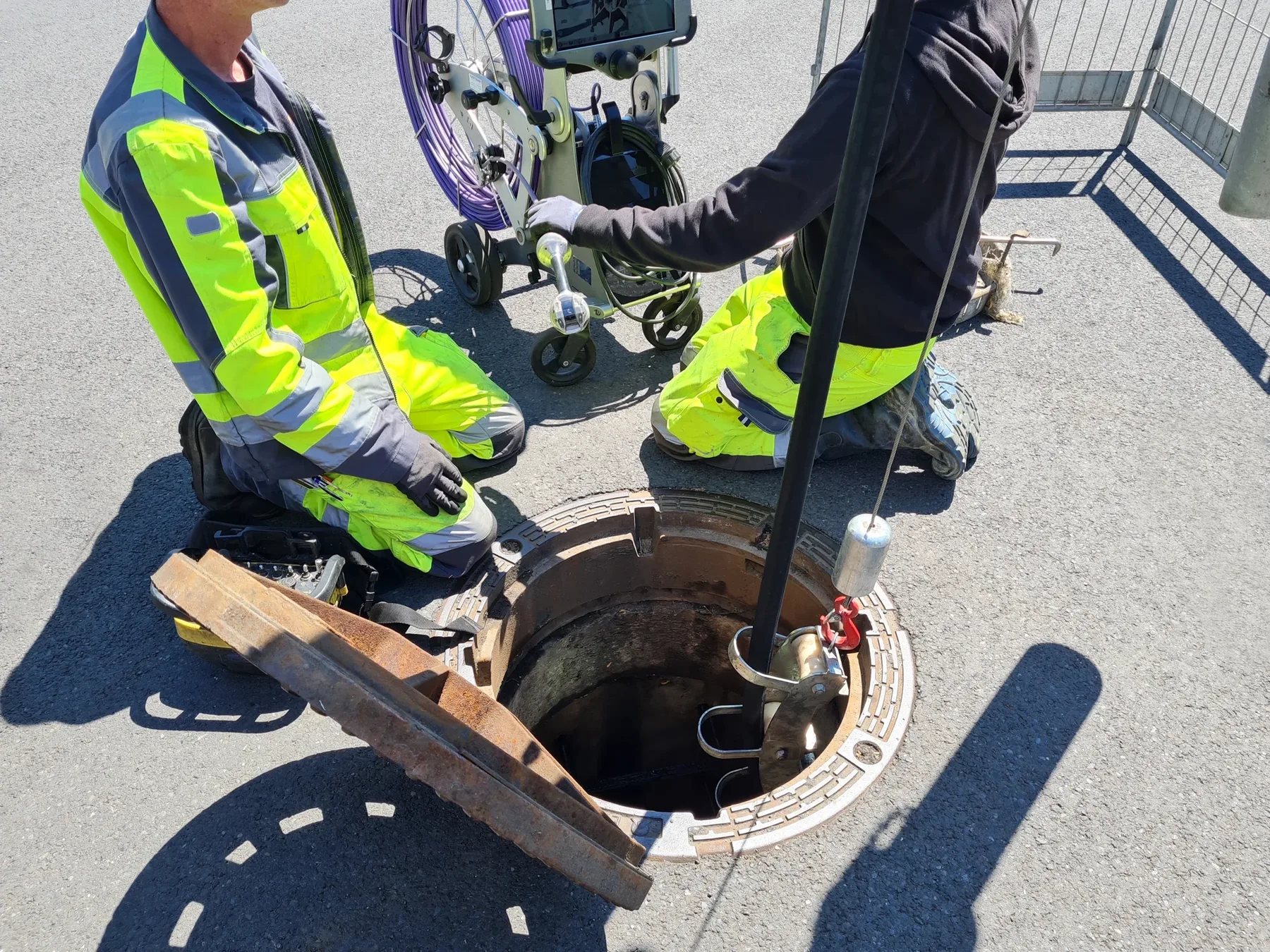
The inspection normally begins by identifying accessible inspection chambers and establishing which drainage runs can be examined. The camera is then passed through the pipework to check its internal condition. The scope depends on the available access, the condition of the drainage and the purpose of the survey.
- Locating accessible inspection chambers and checking available entry points
- Passing the camera through drainage runs where access and pipe conditions permit
- Examining visible pipe joints, connections and changes in pipe material
- Identifying signs of cracks, displaced joints, roots, deposits or other obstructions
- Investigating drainage routes and recording relevant observations
- Identifying sections that could not be inspected or where further investigation may be needed
Chambers on terraced streets sometimes sit in a neighbour’s garden or beneath a front path that has been paved over. Where access through another property is necessary, arranging permission beforehand can help the inspection cover the relevant sections.
Combined drainage and rainwater connections
Parts of London’s historic sewer network were constructed as combined systems carrying foul water and rainwater together. Some older properties also have rainwater downpipes connected into combined drainage. The arrangement at an individual property needs to be established rather than assumed.
A CCTV survey can help identify visible connections, changes in pipe direction and defects that may be contributing to recurring blockages. This is particularly useful where a chamber backs up during heavy rain or the owner is planning changes to the drainage. Where the camera cannot establish how a connection runs, drain dye testing may help trace the flow between accessible drainage points.
If you are buying or building elsewhere in the South East, see our CCTV drain surveys in Kent or the full list of areas we cover.
Free online tool
Build Over Agreement Checker
Check what to ask your sewerage company before building near a drain or sewer.
Common questions
CCTV Drain Survey London: common questions
Who is responsible for the drain under my London garden?
If the pipe serves only your property and sits inside your boundary, it is normally your responsibility. A shared sewer serving neighbouring properties may be Thames Water's responsibility. A CCTV survey can help identify the connections and accessible pipework, while the sewerage company's records help establish ownership and responsibility.
Do I need a drain survey before building an extension in London?
If your extension is planned over or within 3 metres of the centreline of a drain or sewer shown on the sewerage undertaker's records, Approved Document H4 is relevant and the sewer owner should be consulted. A build-over application may be necessary. A CCTV inspection can provide evidence of the accessible pipework's condition before construction and help investigate its route.
My water comes from another company. Who deals with my sewer?
Parts of London receive drinking water from companies other than Thames Water. Thames Water remains the sewerage undertaker across its London service area. If your property falls within that area, enquiries about public sewers, sewer records and building near a public sewer should go to Thames Water rather than your drinking water supplier.
Can you survey a drain shared with my neighbours?
A shared drain can be inspected where suitable access is available and the pipe conditions allow the camera to pass. In terraces, shared drainage may run behind several gardens, so access can depend on neighbouring properties. The extent of the inspection should identify which sections were examined and where access or obstructions prevented further investigation.
What does the survey report include?
A CCTV drain survey is intended to document the condition of the pipework examined, including visible defects such as cracks, displaced joints, roots or deposits. Findings may also cover accessible connections, pipe materials and drainage routes. The information available depends on the inspection scope, equipment, access and pipe conditions, including whether the camera can pass through each section.
Request a quote
Complete the form and we will get back to you.