
CCTV drainage surveys
Facilities Management Drainage
Managed sites can have foul, surface water, kitchen and yard drainage with incomplete records. CCTV surveys, drain tracing and mapping help facilities teams identify what is connected, locate defects and establish which assets need attention.
What drainage on a managed site actually covers
Facilities management drainage services cover more than the foul drain under a building. On a typical managed site the system includes foul drainage from toilets and kitchens, surface water from roofs and hardstanding, gullies and channels across yards and car parks, any interceptor or separator fitted to them, and sometimes a pumping station or an attenuation feature that is missing from the current site records.
Those parts can develop different problems and may fall under different maintenance responsibilities. A kitchen drain that blocks can affect a service corridor. A car park gully that silts up can leave water standing around a loading bay. CCTV drain surveys, drain tracing, mapping and condition reporting help facilities teams identify the affected drainage, understand its condition and investigate recurring faults on managed properties.
Who is responsible for which pipe
Before commissioning drainage work, it is worth establishing whether the affected pipe belongs to the property owner, another private party or the sewerage undertaker. A private drain serving one property is generally the responsibility of the property owner, while adopted public sewers are maintained by the sewerage undertaker. Shared private drainage, lateral drains and unusual site arrangements need closer attention. In England and Wales, many formerly private sewers and lateral drains transferred to sewerage companies in 2011 under the private sewers transfer regulations. This means an older shared run may no longer be the property owner’s responsibility. Scotland and Northern Ireland have different sewerage arrangements and ownership rules.
Highway drainage also needs to be distinguished from private site drainage. Gullies forming part of an adopted highway are generally maintained by the relevant highway authority, but their position alone does not confirm their status. A CCTV survey can record the location of a defect, the affected pipe run and the associated chambers. Drain tracing and existing records can then help identify the appropriate party to contact. Our sewer maps guide explains what public records show and where they are silent.
Leases, service charges and tenant obligations
On let property the next question is who pays. That is a matter for the lease rather than for drainage practice, and the split between landlord repair, service charge recovery and tenant obligation varies considerably between agreements. What the drainage work can do is provide the facts the decision needs: which asset is affected, whether the problem is a blockage or a defect, and what the investigation can establish about its cause. These findings can support discussions between landlords, managing agents and tenants without determining their contractual responsibilities.
Private rented housing has different repair obligations from commercial premises. Government guidance on repairs in private renting states that landlords are responsible for repairs to sanitary fittings, including pipes and drains. This is relevant where a managed portfolio includes residential accommodation, although responsibility for a particular drainage asset and the recovery of costs may still require examination of the circumstances. The guidance also identifies separate housing standards and procedures for Scotland and Northern Ireland.
Kitchens, grease and trade effluent
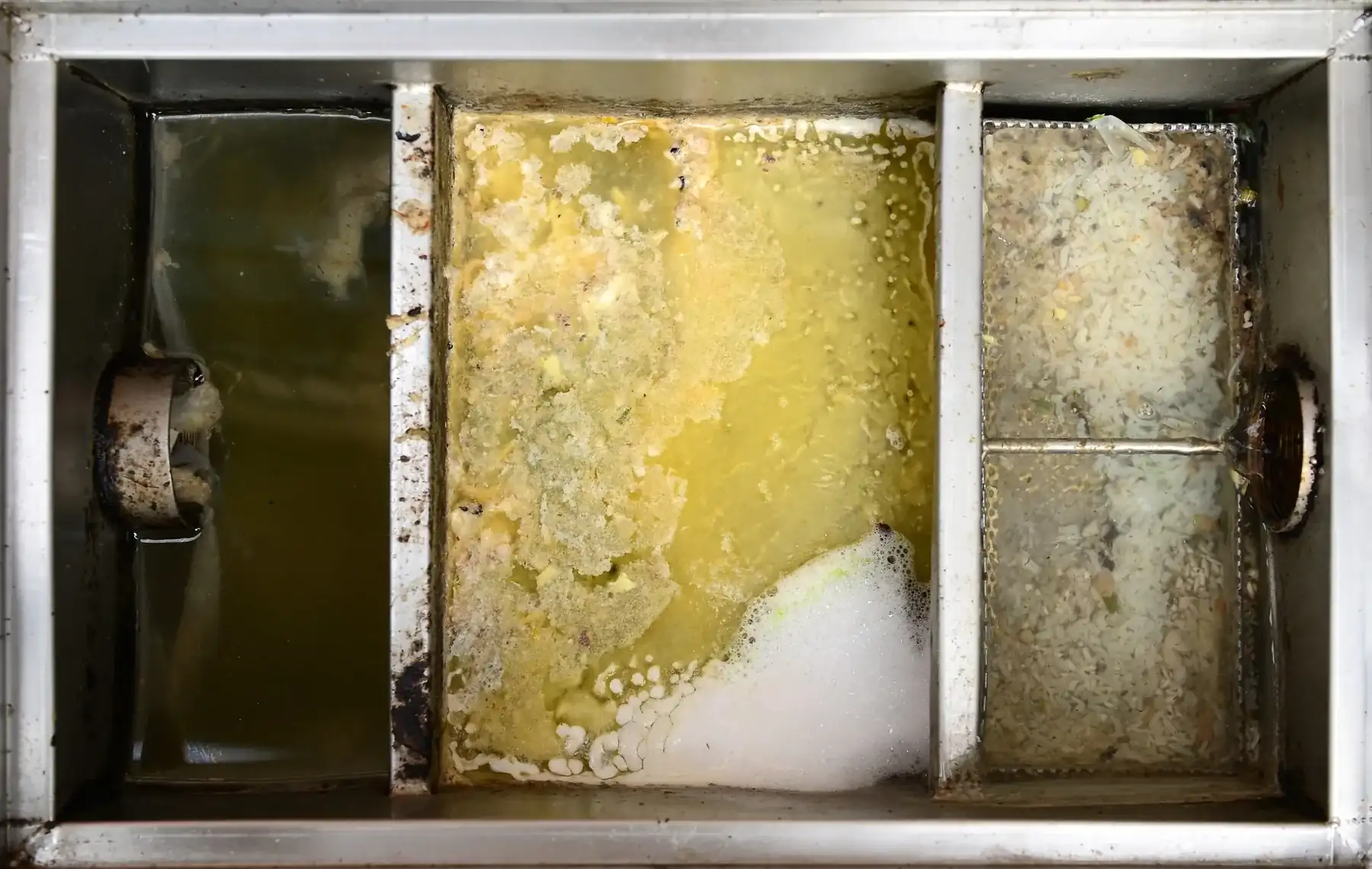
Catering drainage is a common concern on managed sites containing restaurants, cafes, food preparation units or shared kitchens. Fats, oils and greases can leave a kitchen in liquid form, then cool and accumulate inside downstream pipework. Over time, deposits can restrict the available bore and contribute to recurring blockages. The affected section may be outside the tenant’s unit, making the cause difficult to identify from the kitchen alone.
Where grease management equipment is fitted, its condition and maintenance arrangements are worth checking alongside the drainage. If a pipe has been repeatedly cleared, CCTV inspection following suitable cleaning can help establish whether deposits remain, the pipe has deteriorated or another restriction is contributing to the problem. The findings can help distinguish between maintenance issues, pipe defects and changes in how the premises are used.
Where a unit discharges trade effluent rather than ordinary domestic sewage, consent from the sewerage undertaker is required under section 118 of the Water Industry Act 1991 in England and Wales. For sites where a tenant has changed use or fitted new equipment, the discharge arrangements are worth checking rather than assuming that an existing connection is suitable. Different legislative arrangements apply in Scotland and Northern Ireland.
Yards, car parks and pollution risk
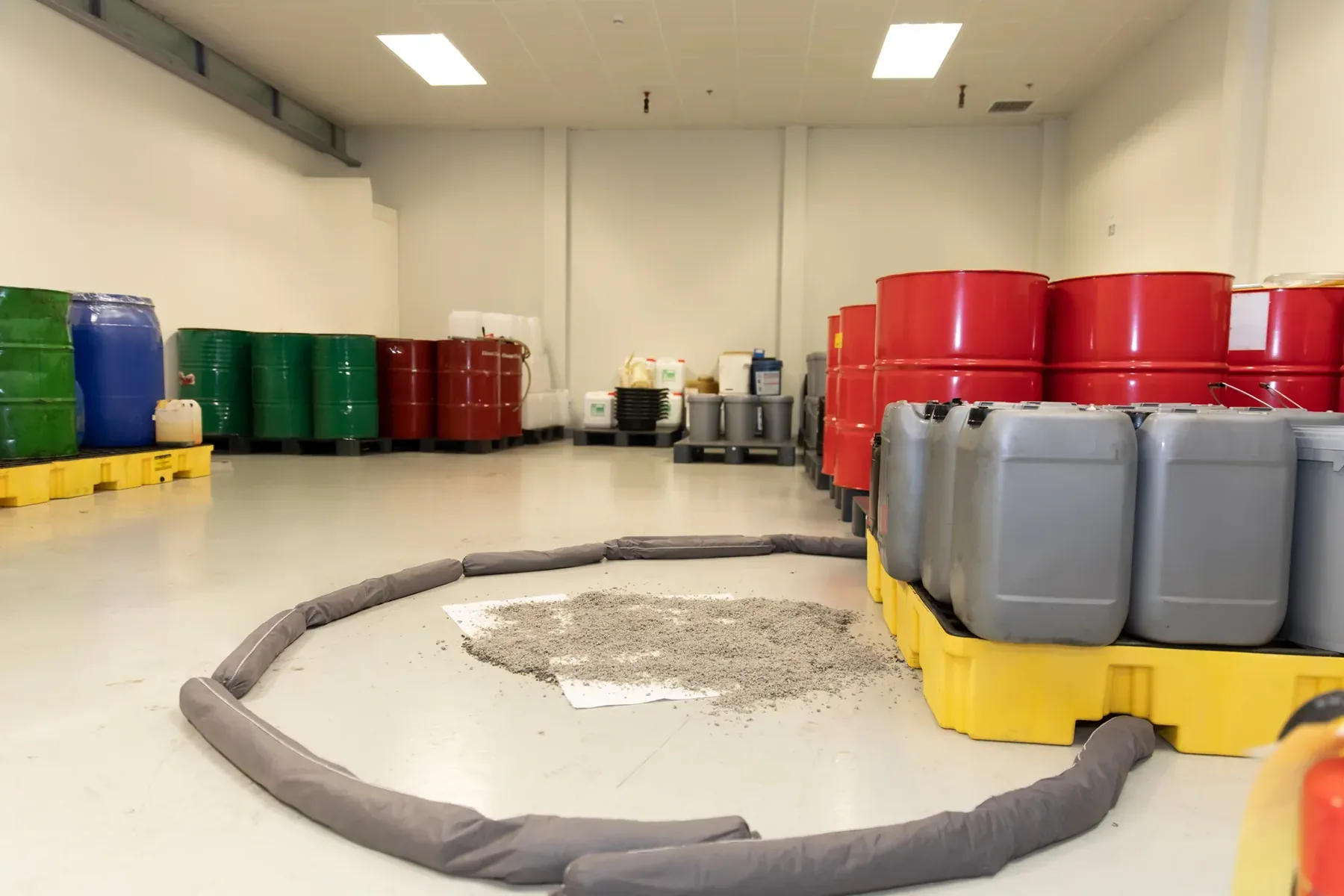
External drainage on a working site receives runoff from roofs, access roads, loading areas, vehicle parking and other hardstanding. The drainage layout matters particularly where washing, vehicle maintenance, waste storage or other activities could introduce contaminants into surface water. Pollution prevention guidance for businesses in England covers activities including oil and chemical storage, washing down and the correct use of drains. Separate guidance is available for Scotland, Wales and Northern Ireland.
Two potential problems are misconnections and defects affecting drainage treatment equipment. A wash bay, bin store or appliance might be connected to surface water drainage when its discharge needs a different arrangement. An interceptor or separator may also have accumulated silt or developed a fault. Establishing the connections can involve chamber inspections, drain tracing and dye testing. CCTV inspection may help investigate the condition of associated pipework, although it does not establish the operational condition of every separator or treatment asset. Our drain dye testing page explains how connections can be checked.
Planned inspection and reactive call outs
Drainage faults are often investigated after a blockage, flooding incident or complaint. Other problems, such as displaced joints, damaged pipes, root ingress and accumulating deposits, may remain unnoticed until symptoms develop. Planned inspection gives facilities teams an opportunity to assess known problem areas and review drainage condition before deciding what maintenance or further investigation is appropriate.
A workable approach is to distinguish properties with a history of recurring problems or known defects, properties with no previous drainage records, and properties with earlier surveys available for comparison. There is no correct inspection interval for every site, and a suitable programme depends on previous findings, how the building is used and the consequences of drainage failure in that location. Our drain surveys for facilities management page covers how survey programmes and asset records can be organised across managed properties.
Assets that need records beyond CCTV inspection
Some drainage assets are not ordinary gravity pipe runs, and a camera survey alone cannot establish their complete condition or maintenance requirements. Pumping stations, separators, grease management equipment, attenuation tanks and non return valves may need separate inspection or maintenance arrangements. Facilities teams benefit from knowing where these assets are, what they serve and whether current records identify the responsible maintenance party.
Where the drainage layout itself is unknown, establishing it may be necessary before deciding which pipework requires a condition survey. Drain mapping can record accessible chambers, traced runs and identified connections, while distinguishing confirmed information from sections that remain unverified. That record can help a managing agent understand how individual units, external areas and shared drainage connect across the site.
Specifying drainage work across a portfolio
Comparable work needs a consistent specification. For each survey, state the runs and chambers to be covered, whether condition coding is required, the report and file formats, and how inaccessible or uncompleted sections should be recorded. Survey direction and available access points are also useful details. Keeping chamber references consistent between drawings and reports makes it easier to compare findings and locate defects on later visits.
Access constraints belong in the specification too. Permits, inductions, trading hours, loading bay movements and chambers beneath parked vehicles can affect which sections are accessible. Known drainage plans, previous reports and relevant site contacts help establish the intended scope. Our commercial drain survey page covers CCTV inspection work on larger sites, while the drainage compliance report page explains the reporting information that may be required.
Fit outs, alterations and building near a sewer
Tenant alterations can change how a drainage system is used. A new kitchen added to a former retail unit, a wash bay installed in a yard or an extension built over an existing run can all raise questions about capacity, connections and access. Before alterations proceed, tracing the relevant drainage and reviewing any available plans can help establish what is already present. Where the proposed work could affect a public sewer, the requirements of the relevant sewerage undertaker also need to be considered.
For building work over or close to a public sewer, the sewerage undertaker may require information about the existing pipe, including CCTV survey evidence. The precise requirements depend on the proposed work and the undertaker concerned. Our build over CCTV survey page covers this type of inspection.
Getting the drainage information your site needs
If the drainage layout is incomplete, a fault keeps returning or responsibility for a pipe is unclear, the useful starting point is the affected area and what is already known about it. Existing plans, chamber references, previous survey reports and details of the problem can help establish whether CCTV inspection, tracing, mapping or a combination of investigations is appropriate.
For facilities management drainage services, the scope should reflect the drainage on the site and the question that needs answering. A condition report can describe visible pipe defects, while tracing and mapping can help establish connections and locations. Together, these records give facilities teams a clearer basis for discussing repairs, maintenance and responsibility with the relevant parties.
Free online tool
Build Over Agreement Checker
Building over or near public drains and sewers
Common questions
Frequently asked questions
What does a facilities management drainage service include?
CCTV inspection and condition reporting of foul and surface water drainage, investigation of recurring problems, and tracing or mapping where plans are incomplete. The scope depends on the site, the drainage assets involved and the information the facilities team needs.
How often should drainage on a managed site be surveyed?
There is no fixed interval suitable for every managed site. Previous survey findings, recurring blockages, the use of the premises and the consequences of a drainage failure can inform inspection planning. Where no previous records exist, an initial investigation can help identify which drainage assets need closer attention.
Who is responsible for a blocked drain outside the building line?
Responsibility depends on the ownership and status of the pipe, not simply its position outside the building. In England and Wales, many formerly private sewers and lateral drains transferred to sewerage companies in 2011. A CCTV survey and drain tracing can help locate the affected run, while ownership records and the relevant sewerage undertaker can help establish responsibility.
Can a tenant be charged for a drainage repair?
For commercial property, this depends on the lease and the circumstances of the repair. A drainage investigation can identify the affected asset, record pipe condition and provide evidence about a blockage or defect. The landlord or managing agent can then consider the findings alongside the relevant lease terms.
Why do kitchen drains keep blocking on managed sites?
Recurring kitchen blockages can involve accumulated fats, oils and greases, damaged pipework, poor falls or other restrictions. Cleaning may clear a blockage without resolving its cause. CCTV inspection after suitable cleaning can help identify visible defects and remaining restrictions, while grease management arrangements may also need reviewing.
We have no drainage plans for the estate. Where do we start?
Drain mapping can begin with accessible inspection chambers, recording incoming and outgoing connections and tracing pipe runs where practicable. This helps establish the layout and identify sections that remain unverified. CCTV condition surveys can then be directed towards the relevant drainage rather than inspecting pipework without a clear understanding of its purpose.
Request a quote
Complete the form and we will get back to you.